A Beginner-Friendly Guide to Making Comb Honey with Ross Rounds
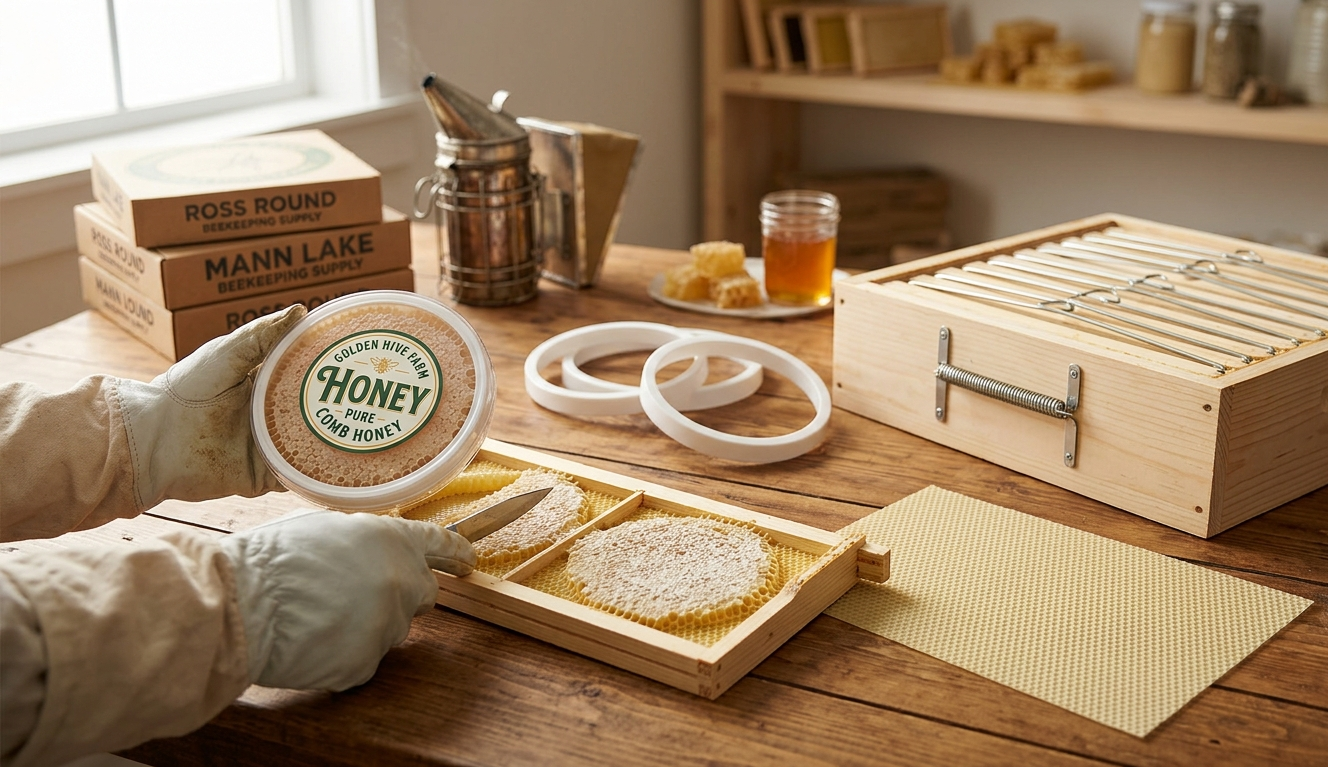
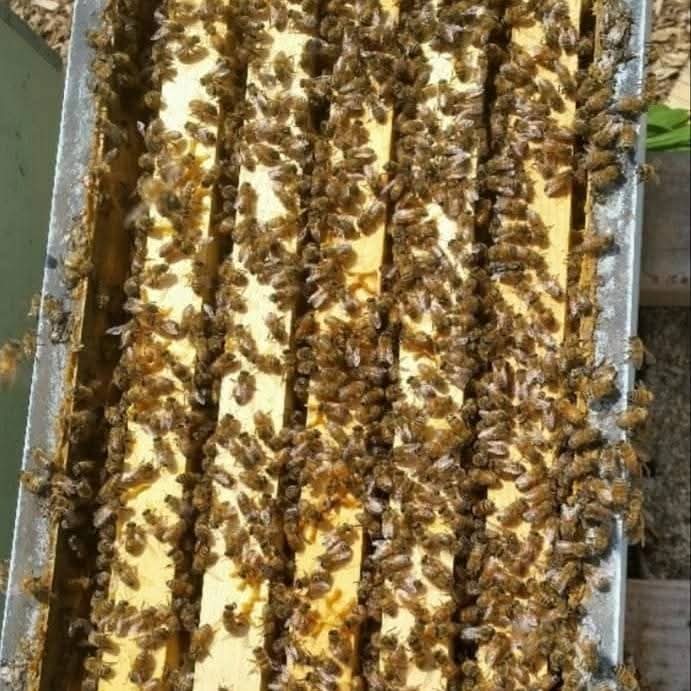
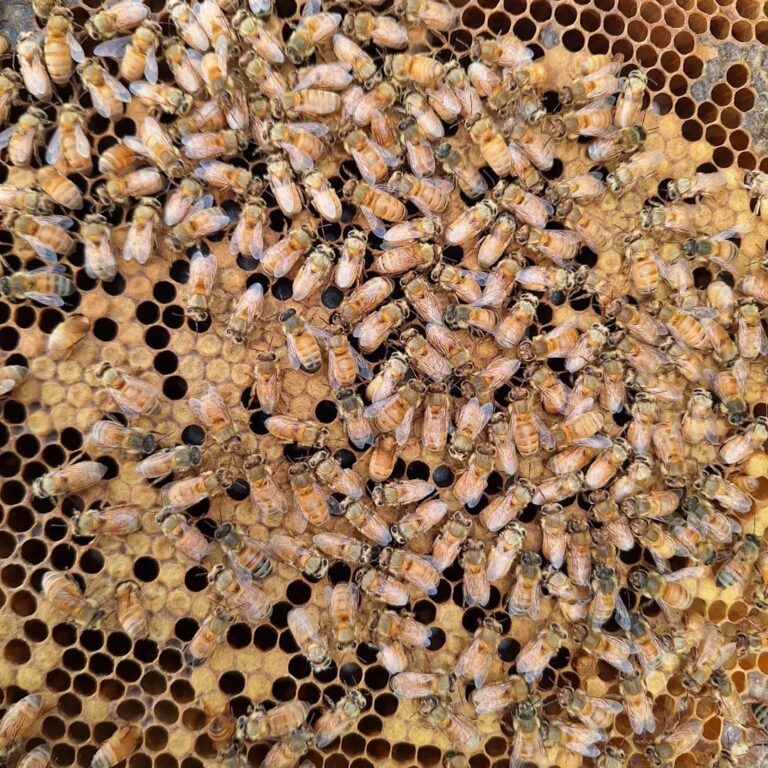
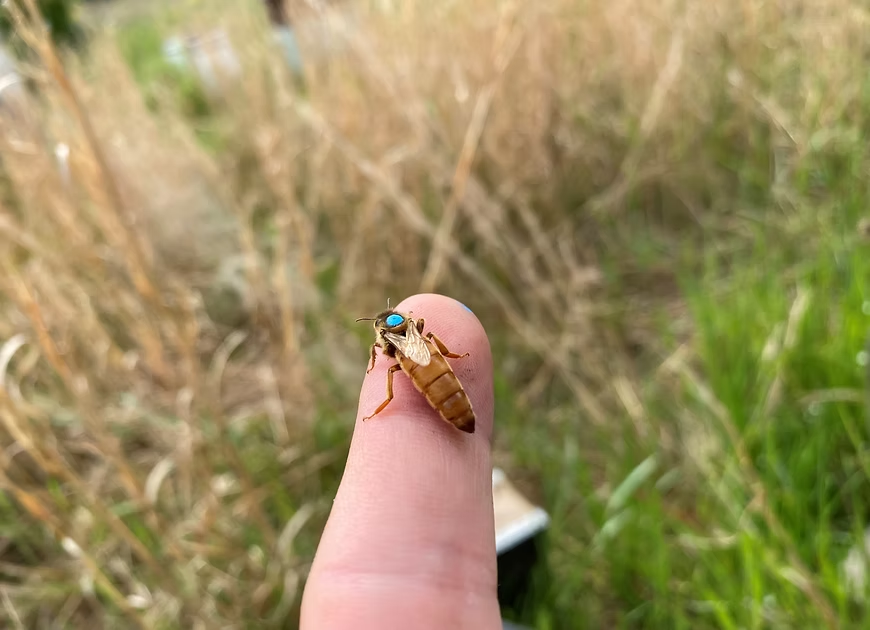
A Beginner-Friendly Guide to Making Comb Honey with Ross RoundsFor centuries, pure comb honey has been considered the crown jewel of the apiary. There is something deeply satisfying about consuming honey exactly as the bees made it—sealed in pristine, delicate wax cappings, untouched by human hands, and completely unfiltered. If you are looking to diversify your apiary products, command premium prices, and delight your local customers, learning how to make comb honey is one of the most rewarding milestones in your beekeeping journey.However, traditional cut-comb honey can be a messy, labor-intensive process. Slicing through sticky wax foundation, draining the exposed cells for hours, and trying to package uniform squares often leaves beginner beekeepers feeling overwhelmed.Enter the Ross Rounds system. Invented in the early 1970s by Dr. Elton J. Ross, this innovative, pre-designed equipment setup simplifies the entire process by guiding your honeybees to build perfectly round, self-contained sections of honeycomb directly inside specialized plastic rings (Ross Rounds, 2024). When the nectar flow ends, you simply remove the frames, pop out the beautiful circular cassettes, snap on transparent covers, and you have an aesthetically pleasing, uniform honey product ready for sale straight from the hive (Ewara, 2025).At Golden Hive Farm, we want to see every backyard beekeeper succeed. In this ultimate, high-density SEO guide, we will break down the exact step-by-step methodology to successfully produce premium Ross Rounds comb honey, manage your bee colony for maximum wax production, and package your harvest flawlessly.Why Choose Ross Rounds for Comb Honey Production?If you are evaluating different comb honey harvesting techniques, you will generally run into three options: the traditional cut-comb method, plastic cassettes like the Hogg Halfcomb system, and the circular Ross Rounds system (Ewara, 2025).While cut-comb is highly accessible because it uses standard frames, it results in substantial honey loss and sticky cleanup. The Hogg Halfcomb system is highly efficient but requires a steep upfront financial investment. Ross Rounds represent the perfect sweet spot for beginners and commercial sideliners alike.The Benefits of the Ross Round System:Zero Extraction Equipment Required: You do not need an expensive centrifugal honey extractor, uncapping knives, or bottling tanks (Ross Rounds, 2024). The bees do 100% of the packaging work for you.Pristine Structural Integrity: Because you do not cut through open cells of honey, the borders of your round sections stay completely dry, clean, and structurally sound (Ross Rounds, 2024).High Market Appeal: The distinctive, uniform circular design stands out dramatically on farmers' market tables and specialty grocery shelves, allowing you to command top-tier pricing.Reduced Cull Sections: The unique design of a Ross Round super utilizes specific follower-boards and super springs that eliminate empty space, forcing the bees to fill and cap even the outermost frames uniformly (Ross Rounds, 2023).Understanding the Anatomy of a Ross Round SuperBefore you purchase your equipment from a reputable supplier like Mann Lake Beekeeping Supply or Betterbee, you need to understand how these specialized components fit together.Unlike a standard honey super that holds rectangular wooden or plastic frames, a Ross Round super is physically shallow—ideally exactly $4\frac{1}{2}\text{ inches}$ in height to minimize the production of messy burr comb (Ross Rounds, 2023). Inside this customized box, you will find a highly strategic configuration:Molded Plastic Frame Halves: The frames are constructed of brown, injection-molded plastic and split vertically down the center like a book (Ross Rounds, 2023).White Section Rings: For each frame, you insert four white circular plastic rings (two per side, totaling eight rings per assembled frame). These rings form the physical perimeter of the individual round honey sections that the consumer will buy.Thin Surplus Wax Foundation: A single sheet of ultra-thin, pure beeswax foundation is sandwiched directly between the two frame halves, cutting straight through the center of the rings (Ross Rounds, 2023).Follower-Boards and Super Springs: To compress everything tightly and eliminate "bee space" gaps where bees might build wild comb, the super utilizes thick wooden follower-boards on the flanks, clamped down tightly by heavy-duty metal super springs (Ross Rounds, 2023).Step 1: Prepping and Assembling Your Ross Round EquipmentAssembling your Ross Round frames for the first time takes a little bit of practice, but once you establish a rhythm, it is an easy kitchen-table project. Follow this precise procedure to ensure your components are perfectly aligned:1.Open the Frame Halves:Prerequisite: Clean workspace.Lay the brown plastic frame halves flat on your table. If they are already joined, gently insert the flat edge of a hive tool into the slot at the end of the frame and twist slightly to separate the halves like an open book (Ross Rounds, 2023).2.Position the White Section Rings:Crucial Alignment Step.Take a handful of white plastic section rings. Position one ring over each round cavity on both halves of the frame. Ensure the notched side faces down and the wide sections of the rings rest flush against each other along the center line of the frame (Ross Rounds, 2023). Press down firmly with both hands until the rings snap into place against the molded internal nibs (Betterbee, n.d.).3.Lay the Thin Surplus Foundation:Use Pure Beeswax Only.Lay a single sheet of $4 \times 16\frac{1}{2}\text{ inch}$ thin surplus wax foundation flat over one half of the assembled frame (Ross Rounds, 2023). Do not use standard thick brood foundation or plastic-core foundation; comb honey requires delicate, entirely edible wax that leaves no chewy residue in the mouth.4.Snap the Frame Halves Together:Double-Check the Seal.Carefully pick up the matching frame half and align it directly over the foundation. Press the two halves firmly together until they snap shut. Visually inspect the frame from both sides: you should see a crisp white ring sitting perfectly flush in every single circular opening (Ross Rounds, 2023).5.Load the Super and Apply Springs:Tighten the Assembly.Slide your assembled frames into the $4\frac{1}{2}\text{-inch}$ super. Insert your wooden follower-boards along the interior side walls. Finally, insert three metal super springs between the final follower-board and the outer wall (Ross Rounds, 2023). This forces the frames tightly against each other, eliminating gaps and preventing the bees from coating the exterior plastic with sticky propolis.Step 2: Colony Management for Maximum Wax ProductionYou can have the most expensive, perfectly assembled Ross Round equipment in the world, but if your colony management is lacking, your bees will completely ignore the super.Honeybees are naturally reluctant to work in small, divided plastic spaces. To force them into the Ross Round sections, you must manipulate the hive environment to create intense crowding and trigger explosive wax production (Mann Lake, n.d.).1. Build an Overwhelming Bee PopulationTo draw out pristine white comb, you need a massive workforce of young nurse bees. Specifically, worker bees between 10 and 18 days old possess the most highly active wax glands (Mann Lake, n.d.).Two to three weeks before your region's primary nectar flow begins, condense your colony. Ensure your brood chamber is absolutely bursting with capped brood (Mann Lake, n.d.). If necessary, equalize your apiary by taking frames of capped brood from weaker hives and shaking extra nurse bees into your designated comb-honey producing hive.2. Run a Compressed Hive SetupWhile liquid honey producers like to give their bees vast amounts of vertical space to prevent swarming, comb honey producers must do the exact opposite. Many successful comb honey producers utilize a single-deep hive setup during the flow (Honey Bee Suite, 2024).By restricting the queen and the brood nest to a single deep hive body, the massive population of bees is physically forced upward into the Ross Round super to store the incoming nectar.3. Master the "Under-Supering" TechniqueTiming your nectar flow is everything (Mann Lake, n.d.). If you put your Ross Rounds on too early, the bees will chew holes in your expensive thin surplus foundation. If you put them on too late, you will miss the peak of the flow.A highly effective pro-tip used here at Golden Hive Farm is under-supering:The Under-Supering Trick: Allow your colony to begin working in a standard, half-filled honey super first. Once they are actively drawing comb there, lift that super up and place your prepared Ross Rounds super directly underneath it, right on top of the brood nest (Mann Lake, n.d.). Bees naturally despise having an empty gap between their brood nest and their primary honey stores. They will rush into the Ross Round frames immediately to bridge the gap, drawing out the circular sections in a matter of days (Mann Lake, n.d.).Step 3: Monitoring the Nectar Flow and Swarm PreventionBecause you are intentionally crowding a massive population of bees into a compressed space, you must keep a watchful eye on your hive's swarming impulse. Inspect the brood nest every 7 days for the presence of swarm cells. If you find queen cells being drawn along the bottoms of your frames, you must act fast to manage the colony's space or execute a controlled split.Additionally, keep in mind that the faster your bees fill and cap the Ross Rounds, the more beautiful the final product will be (Hive World, 2022). If honey sits inside a hive for too long, worker bees walking across the frames will stain the snow-white cappings with propolis—a phenomenon beekeepers call "travel stain."For optimal aesthetics, your honey should look bright, clean, and completely white. Check your Ross Round super weekly during the height of the clover, wildflower, or alfalfa flow, and prepare to harvest the exact moment the cells are entirely capped (Hive World, 2022).Step 4: How to Harvest Your Ross Rounds FlawlesslyOnce the central sections of your Ross Round super are fully capped, it is time to harvest. Do not wait until the end of the autumn season. Remove the filled comb honey supers as soon as they are ready, and swap them with fresh boxes if the nectar flow is still going strong (Hive World, 2022).Clearing the Bees SafelyWhen removing your comb honey supers, avoid using violent frame-shaking or harsh, gasoline-scented chemical bee repellents. Delicate new comb can easily fracture, and raw wax readily absorbs chemical odors if the repellent pads are left on for more than 2 to 3 minutes (Betterbee, n.d.). Instead, use a physical triangle escape board or a gentle, non-toxic bee blower to clear the workers out of the box safely.Disassembling the FramesBring your heavy, honey-filled super into a clean, bee-tight indoor workspace. Follow these steps to extract your circular sections:Remove the super springs and slide out the follower-boards.Lift out a filled frame and stand it vertically on your table (Betterbee, n.d.).Gently insert your hive tool into the seam at the top of the brown plastic frame and twist until the two halves separate cleanly (Betterbee, n.d.).Your round honey sections will now be resting in one half of the frame, still held together by the remaining margins of the thin surplus foundation (Betterbee, n.d.).Using a clean, sharp hobby knife or a warm hive tool, carefully slice through the thin web of wax foundation between the individual white rings (Betterbee, n.d.). Lift each round section out by the edges of the plastic ring—never press or squeeze the wax comb itself (Betterbee, n.d.).Step 5: Post-Harvest Processing and Preventing PestsBefore your beautiful Ross Rounds can be labeled and sold under your apiary's brand, you must protect your hard-earned harvest from two devastating post-harvest threats: wax moths and fermentation (Betterbee, n.d.).The Critical Freezing ProtocolEvery single environment where bees live contains microscopic, invisible eggs laid by the Greater Wax Moth (Galleria mellonella). If left in a warm pantry, these eggs will hatch into destructive larvae that tunnel through your gorgeous comb, ruining its appearance and structural integrity.To prevent this completely, you must freeze your completed sections (Betterbee, n.d.):Place your individual round sections or your entire filled frames inside heavy-duty, airtight plastic freezer bags (Betterbee, n.d.).Freeze them at $0^\circ\text{F}\text{ } (-18^\circ\text{C})$ or colder for a minimum of 24 hours to completely destroy any latent wax moth eggs or small hive beetle larvae (Betterbee, n.d.).Crucial Rule: When you remove the sections from your freezer, keep them sealed tightly inside the plastic bags until they have warmed back up to room temperature (Betterbee, n.d.). If you open the bag too early, warm ambient air will cause moisture to condense directly onto the cold wax cappings, leaving your premium comb honey looking soggy, "wet," and unappealing to buyers (Betterbee, n.d.).Preventing Honey FermentationRaw comb honey naturally contains wild, airborne yeasts. If your honey has a moisture content above 18% and is stored in an environment with ambient humidity exceeding 80%, these yeasts will trigger fermentation (Betterbee, n.d.). Fermenting honey will expand, weep a sour, clear liquid through the cappings, and take on an unpleasant, vinegary taste (Betterbee, n.d.).Always store your unprocessed supers and finished combs in a climate-controlled room with excellent air circulation. Run a heavy-duty dehumidifier during high-humidity seasons to keep the storage environment dry and stable (Betterbee, n.d.).Step 6: Packaging, Labeling, and Marketing Your Premium ProductOne of the greatest joys of the Ross Rounds system is how beautifully simple it makes the packaging stage. You do not need to deal with custom shrink-wraps or complex boxing.Snapping on the CoversRoss Rounds manufacturers produce custom-molded plastic covers designed explicitly to snap onto both sides of the white section rings (Ross Rounds, 2023). These covers come in two distinct styles:Transparent Clear Covers: Ideal for the front face of your product, allowing customers to admire the intricate, snowy-white hexagonal wax architecture sculpted by your bees.Opaque White or Colored Covers: Often used for the back face of the section, providing a clean, professional background.Simply place a section ring flat on your clean workspace, press a clear cover onto the top face until it snaps securely over the rim, flip it over, and snap a cover onto the back (Ross Rounds, 2023). Your honey is now completely sealed, dust-proof, and totally leak-proof.+-------------------------------------------------------+
| ROSS ROUND PACKAGING CROSS-SECTION |
+-------------------------------------------------------+
| [ Clear Plastic Top Cover ] <-- Fits over white rim |
| =============[ Snow-White Wax Cappings ]============ |
| #############[ Raw Liquid Honey Cells ]############# |
| --------------( Thin Surplus Foundation )----------- |
| #############[ Raw Liquid Honey Cells ]############# |
| =============[ Snow-White Wax Cappings ]============ |
| [ White Plastic Back Cover ] <-- Seals the cassette |
+-------------------------------------------------------+
Designing Your Professional SEO-Friendly LabelTo maximize your sales and build a highly recognizable local brand, wrap a custom, circular or rectangular label across the center seam of the plastic round box. Your label should not only look beautiful but must also meet local agricultural labeling laws. Ensure your packaging explicitly features:Your Brand Name: e.g., Golden Hive Farm Premium Comb HoneyNet Weight: Typically, a fully drawn and packed Ross Round section weighs between $8\text{ and }12\text{ ounces } (227\text{ to }340\text{ grams})$, depending on how heavily the bees filled the cell depths. You must weigh each section individually and note the true net weight.Key Consumer Value Propositions: Use highly searchable, consumer-friendly descriptors like "100% Raw, Unfiltered Comb Honey," "Eaten Whole with the Wax," and "An All-Natural Delicacy."An Infant Warning: Always print a small, clear notice stating: "Do not feed raw honey to infants under one year of age."Dealing with "Cull" or Unfinished SectionsIn every single Ross Round super, you will occasionally find a few sections—usually on the far left or right edges—that the bees did not completely fill or cap before the nectar flow dried up (Betterbee, n.d.). Do not throw these away!You can easily salvage unfinished sections by using your hive tool to cut the partially filled chunks out of the plastic rings (Ross Rounds, 2023). Drop these gorgeous, rustic cut-comb pieces into wide-mouth glass mason jars and pour hot, liquid extracted honey around them (Ross Rounds, 2023). This creates a stunning, premium product known as chunk honey, which often sells just as quickly as perfect round sections at your local farmers' markets (Ross Rounds, 2023)!Final Thoughts: Elevate Your Apiary TodayLearning how to produce comb honey using the Ross Rounds method is an incredibly smart step for any modern, forward-thinking beekeeper. By understanding your local nectar flows, compressing your hive populations to maximize natural wax production, and following a strict post-harvest freezing routine to stop pests in their tracks, you can consistently generate flawless, highly profitable, and breathtakingly beautiful rounds of pure comb honey season after season.Are you ready to step up your beekeeping game this year? Keep your hives strong, crowd those boxes at the first sign of clover blooms, and let your bees show you why the classic Ross Round system remains the gold standard of hands-off comb honey production.ReferencesBetterbee. (n.d.). Assembly of round comb section equipment. https://www.betterbee.com/images/Ross_Round%20Comb%20Equipment_Assembly.pdfEwara, E. (2025, March 11). Exploring different comb honey harvesting techniques. Crystal's Raw Honey Blog. https://crystalsrawhoney.com/blogs/news/exploring-different-comb-honey-harvesting-techniquesHive World. (2022, May 25). Comb honey production. Hive World Beekeeping Equipment. https://www.hiveworld.co.nz/comb-honey-production-2/Honey Bee Suite. (2024, April 26). Making comb honey should be simple and fun. https://www.honeybeesuite.com/making-comb-honey-should-be-simple-and-fun/Mann Lake. (n.d.). A beginner-friendly guide to making comb honey with ross rounds. Mann Lake Beekeeping Blog. https://www.mannlakeltd.com/blog/a-beginnerfriendly-guide-to-making-comb-honey-with-ross-rounds-/Ross Rounds. (2023). Producing comb honey — Ross Rounds & Sundance pollen traps. https://rossrounds.com/producing-comb-honeyRoss Rounds. (2024, September 10). Ross rounds: The sweet simplicity of honey without extraction! Andysworld Beekeeping Journal. https://andysworld.org.uk/2024/09/10/ross-rounds-the-sweet-simplicity-of-honey-without-extraction-from-hive-to-your-hands-a-natural-approach-to-comb-honey-production/