where to buy honey bees ,For a beginning or expanding beekeeper, the transition from reading textbook management theory to establishing a living, buzzing apiary is a critical milestone. It is an exciting step, but it is also where many costly mistakes happen. A common mistake is buying from unverified suppliers, which can introduce weak genetics, trace chemical residues, or devastating pathogens like American Foulbrood (Paenibacillus larvae) right into your clean woodenware.
If you are currently typing queries like where to buy honey bees, where can i buy honey bees, where do i buy honey bees, or how to buy honey bees into search engines, this comprehensive guide is built exactly for you.
Achieving long-term success in apiculture requires looking beyond simple digital listings. This guide offers a deep dive into biological sourcing, evaluating queen lines, timing your spring setup, and navigating logistics.
Best of all, you do not have to wonder about reliability: you can order premium, deeply acclimated honey bees and high-performance equipment directly from our secure portal at Golden Hive Farm. Let’s break down the exact process of buying honey bees safely, intelligently, and with maximum biological authority.
1. Package Bees vs. Nucleus Colonies (Nucs): The Essential Choice
Before looking into suppliers, you must address a foundational question: In what structural form should you buy your honey bees? Commercial producers offer two primary biological configurations for open-market purchase. Choosing the right option has a major impact on your first-year honey production and how quickly your colony builds out wax.
[ACQUISITION FORMATS]
├── Package Bees ─────────> Loose screen box, separate queen cage, zero drawn comb
└── Nucleus Colony (Nuc) ──> 5 living frames, active brood nest, established honey/pollen walls
The Package Bee Setup: A Loose Swarm Simulation
A standard package of bees looks like a wood-framed wire mesh box containing roughly 3 pounds of loose, worker bees (approximately 10,000 individuals) and a single, unrelated queen housed in a separate, protective cage suspended at the top next to a temporary sugar syrup can.
- Pros: Package bees are generally less expensive upfront than a nucleus colony and are easily shipped long-distance through standard postal networks. They are also entirely free of old comb, eliminating the risk of inheriting degraded wax or hidden pest eggs from an outside apiary.
- Cons: A package is a highly artificial biological setup. The worker bees did not grow up under this queen; they were shaken from multiple different donor hives into a single box. When you install them into empty woodenware, they must spend a massive amount of metabolic energy simply building out fresh honeycomb from scratch before the queen can lay a single egg. This puts them roughly 3 to 4 weeks behind a nucleus setup in terms of population growth.
The Nucleus Colony (Nuc): A Miniaturized, Fully Functioning Hive
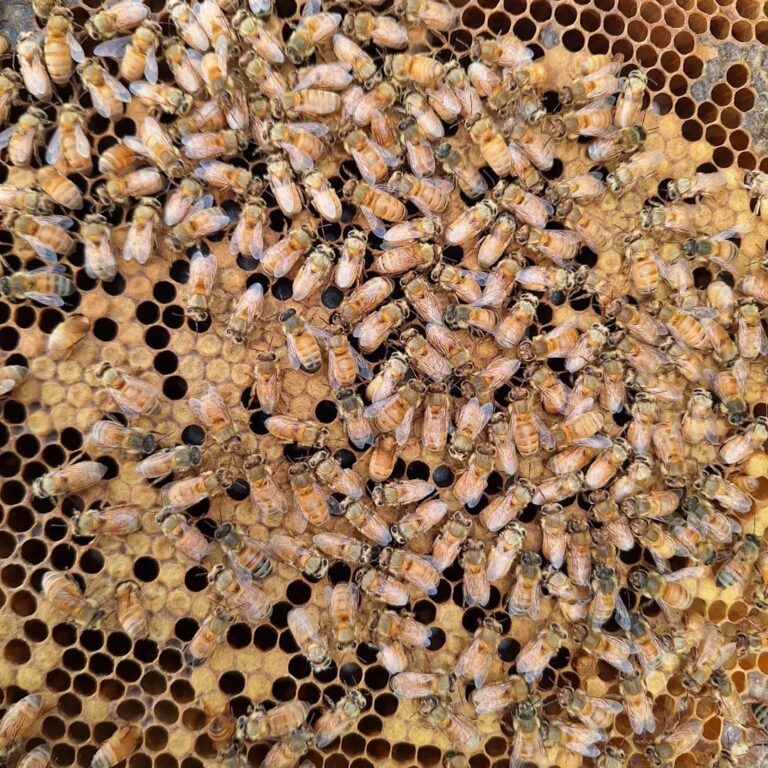
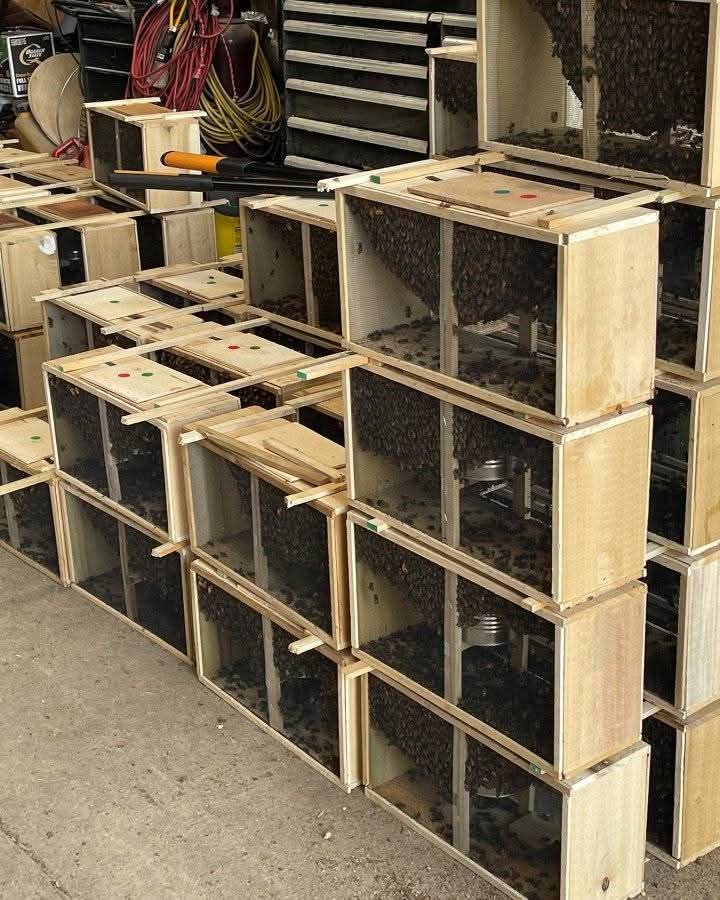
A nucleus colony is an established, living family ecosystem housed in a compact 5-frame transit box. When you purchase a nuc, you are buying a complete, miniaturized hive structure that has been actively working together for weeks.
- Pros: Inside a 5-frame nuc, you receive drawn wax comb, an established queen who is actively laying eggs, and multiple generations of developing brood (eggs, larvae, and capped pupae). You also get stored honey and fermented pollen walls.
- Cons: Because they contain living combs, nucs cannot be safely shipped through standard mail networks. They require personal pickup or specialized climate-controlled transport. They also carry a slightly higher upfront cost due to the valuable drawn wax and active brood frames included in the setup.
Comparative Biological Performance Matrix
| Production Metric | Package Bees (3-lb Box) | Nucleus Colony (5-Frame Nuc) |
| Immediate Storage Needs | Requires full foundation drawn out | Includes 5 frames of pre-drawn wax comb |
| Queen Acceptance Risk | Higher (Queen is introduced manually) | Near zero (Queen is already laying on frames) |
| First-Year Honey Potential | Typically low (Focuses energy on wax growth) | High (Ready to add supers for surplus flows) |
| Population Growth Curve | Delayed by 21 days (Brood cycle delay) | Continuous (Foragers emerge on day one) |
| Pest Vulnerability | Low initial load | Requires evaluation for mites/beetles |
For both beginning backyard apiarists and scaling commercial outfits, purchasing a 5-frame nucleus colony is the most effective approach. It minimizes first-year mortality, avoids introduction stress, and gives you a fully functional brood nest from day one. If you are ready to secure a strong start, you can order healthy, wintered, and spring-started nucleus colonies directly via my site at Golden Hive Farm.
2. Queen Genetics: Selecting the Right Honey Bee Strain
When figuring out how to buy honey bees or where can you buy honey bees, you must look beyond total numbers and focus on genetics. The queen bee is the genetic engine of your hive. Her characteristics dictate the behavior, overwintering ability, disease resistance, and honey-gathering efficiency of the thousands of workers she produces.
                     [QUEEN GENETIC VARIETIES]
     ____________________________┴____________________________
    /                            │                            \
[Italian Line]            [Carniolan Line]            [Saskatraz Line]
- High brood production   - Low winter consumption    - Extreme varroa hygienic
- Exceptional honey flow  - Explosive spring build-up - Cold climate survival
- Requires high forage    - Prone to early swarming   - Premium hybrid selection
The Italian Honey Bee (Apis mellifera ligustica)
The Italian honey bee is the most popular strain across global commercial apiculture, and for good reason. They are highly valued for their bright golden color, exceptionally gentle disposition, and manageable swarming instincts.
- Key Traits: Italian queens maintain an expansive brood nest from early spring straight through late autumn. This long cycle results in a massive worker force capable of gathering exceptional volumes of honey during intense summer nectar flows.
- Management Note: Because they maintain a large colony population deep into autumn, Italian bees consume honey reserves at a faster rate than other strains during the winter cluster phase. Beekeepers must monitor their food stores closely in late winter to prevent starvation.
The Carniolan Honey Bee (Apis mellifera carnica)
Hailing from the mountainous regions of Eastern Europe, Carniolan bees are dark-bodied, incredibly resilient survival specialists optimized for unpredictable, northern climates.
- Key Traits: Carniolans show incredible responsiveness to seasonal shifts. In autumn, the queen quickly scales back egg production, allowing the colony to form a compact, fuel-efficient winter cluster that consumes very little honey. In spring, as soon as the first tree pollen drops, the colony expands rapidly.
- Management Note: Their rapid spring buildup requires close attention. If an apiarist fails to provide extra box space early in the season, the hive’s natural reproductive instinct will trigger, leading to early spring swarms.
Advanced Hybrid Selections: Saskatraz and VSH Lines
Modern bee breeding has advanced significantly to combat natural pressures like the parasitic Varroa destructor mite. Lines like Saskatraz and VSH (Varroa Sensitive Hygiene) are specially selected for their grooming behaviors and ability to detect and remove pest larvae from capped cells.
If you are wondering can you buy honey bees that can handle intense winter conditions and resist pests without relying on heavy chemical treatments, look for specialized hybrid lines. At Golden Hive Farm, we focus on cultivating queen lines that balance gentle temperaments with strong pest resistance, ensuring your investment thrives across changing seasons.
3. The Sourcing Checklist: Questions to Ask Before Buying
When exploring where do i buy honey bees or evaluating local suppliers, you need to look closer at their operation to ensure you are getting healthy stock. Do not hesitate to interview your chosen breeder. A reputable producer will happily share their management protocols and pest data.
Use this systematic checklist during your evaluation:
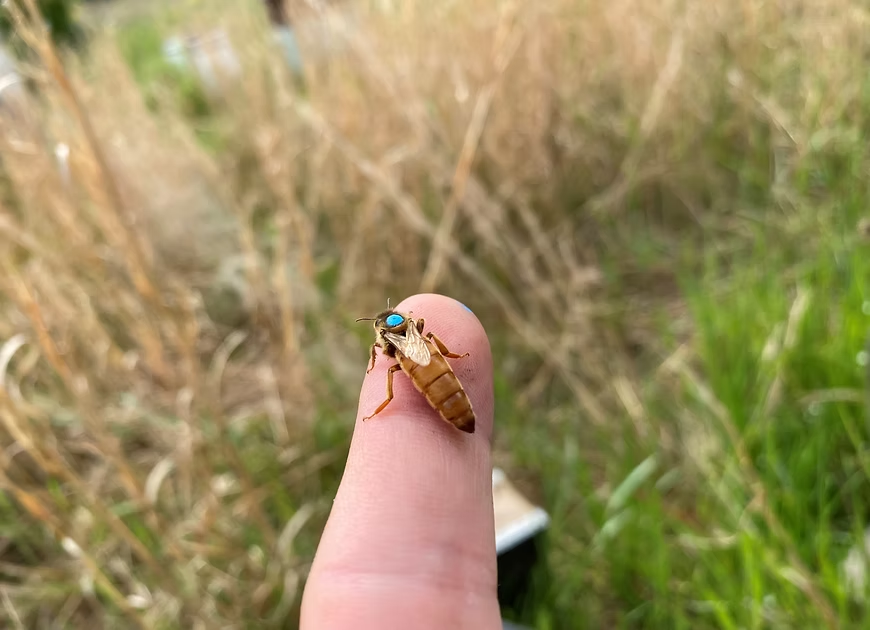
- Is the Queen Marked? A marked queen has a small dab of non-toxic paint on her thorax. This makes her much easier to spot during complex hive inspections. The specific color used also indicates her birth year according to an international standard system (White, Yellow, Red, Green, Blue).
- What is the Source of the Wax Comb? For nucleus purchases, confirm that the combs were built in-house and are not old, dark cull frames from commercial pollination contracts. Clean, light-brown comb keeps your brood nest healthy and minimizes chemical exposure.
- What is the Current Varroa Management Strategy? Ask the breeder for their recent alcohol-wash mite counts and treatment history. You want bees from a program that actively monitors and manages mite levels to prevent viruses from weakening your new colony.
- Are the Hives Inspected by the State or Local Authority? Reputable producers operate under up-to-date health certificates issued by agricultural departments. This documentation ensures the apiary is completely free from highly contagious brood diseases like American Foulbrood.
4. The Biological Timeline: When to Place Your Order
Timing is critical when purchasing livestock. You cannot simply order honey bees in mid-summer or late autumn and expect them to survive the upcoming winter cycle. The entire purchase timeline is driven by regional weather patterns and seasonal plant blooms.
The Annual Order and Installation Cycle
1.Early Winter Booking and Logistics Reservation:Months: November – February.
Commercial bee bookings open months before the spring thaw. High-quality producers sell out of their limited seasonal capacity early in the winter. During this time, finalize your hive hardware preparation, choose your queen genetics, and place your deposit online to secure your delivery date.
2.Spring Pre-Arrival Hardware Inspection:Months: March – April.
Set up your physical apiary location. Assemble your wooden Langstroth boxes, install mouse guards, paint the exterior faces, and set up secure hive stands. It is vital to have your equipment fully ready before your bees arrive so you can transition them smoothly.
3.Colony Pickup and Soft Hive Transition:Months: Late April – May.
This is the ideal installation window, timed with the early fruit tree blooms and spring dandelion flows. Pick up your nuc or receive your package, keep the bees shaded and cool during transport, and install them into their permanent home during a calm afternoon.
4.Continuous Hive Expansion and Feeding Support:Months: May – June.
Provide a steady supply of 1:1 sugar syrup to support rapid comb growth. Monitor the queen’s laying patterns across the frames and add your second deep brood box or honey supers as soon as the initial frames are 70-80% filled with comb and brood.
5. Step-by-Step Guide: How to Install a 5-Frame Nucleus Colony
Once you complete your research on where to buy honey bees and bring your 5-frame nuc home from Golden Hive Farm, the actual physical transfer of the living colony into your permanent 10-frame Langstroth equipment requires a calm, structured approach.
Required Materials
- Your fully assembled 10-frame Langstroth deep brood box with 5 empty frames ready.
- A protective bee suit, veil, and sturdy leather gloves.
- A lit smoker fueled with clean, smoldering burlap or pine needles.
- A metal hive tool.
- Internal or top-hive feeding equipment loaded with fresh 1:1 sugar syrup.
The Transfer Process
- Position the Travel Nuc: Place the closed transport nuc box directly on top of or immediately alongside the permanent hive stand. Open the small travel entrance and let the bees fly for 30 to 45 minutes to orient themselves and calm down after transport.
- Smoke the Entrance: Blow a few gentle puffs of cool smoke into the entrance of both the nuc box and your permanent hive body. This smoke triggers the bees to consume honey, which keeps them calm and significantly reduces defensive behavior.
- Open and Inspect the Nuc: Carefully pry off the lid of the nuc box using your hive tool. Move slowly and avoid sudden movements, which can startle the cluster.
- Transfer the Center Frames First: Use your hive tool to separate the frames inside the nuc box. Lift the central frame—which typically contains active brood and the queen—and carefully lower it into the center of your permanent 10-frame box. Maintain the exact same order and face-direction as they were arranged in the travel box.
- Move the Outer Resource Frames: Transfer the remaining outer frames, which contain the colony’s honey and pollen stores, placing them snugly against the central brood nest.
- Add Empty Frames and Feed: Fill the remaining open spaces in your 10-frame box with your 5 empty frames, sliding them to the outside edges. Shake any remaining loose bees from the travel box directly into the hive, close the cover, and add your sugar syrup feeder to give the colony a strong, supported start.
                    [10-FRAME TRANSITION LAYOUT]
 ___________________________________________________________________
│[E]│[E]│[E]│ █ RESOURCE █ │ █ BROOD █ │ █ QUEEN █ │ █ RESOURCE █ │[E]│[E]│[E]│
│   │   │   │   FRAME    │   FRAME   │   FRAME   │   FRAME    │   │   │   │
└───┴───┴───┴────────────┴───────────┴───────────┴────────────┴───┴───┴───┘
 \_________/ \______________________________________________/ \_________/
   3 Empty                       5 Transferred                  3 Empty
   Frames                        Meticulously From Nuc          Frames
6. Addressing Exotic Queries: Sourcing Vulture Bee Honey
In addition to traditional livestock requests, there is a growing interest in unusual entomological products. A notable example is the search query: where to buy vulture bee honey.
Understanding Vulture Bee Biology
Vulture bees (specialized species within the genus Trigona, such as Trigona necrophaga) are tropical, stingless bees native to the dense rainforest ecosystems of Central and South America. They are unique because they do not harvest nectar or pollen from blossoms. Instead, they are obligate necrophages, meaning they gather protein from carrion (dead animal flesh).
[Carrion Protein Sourcing] ──> Internal Microbe Fermentation ──> Dark, Edible Sweet Paste
The bees process this animal protein using specialized internal microbes, transforming it into a sweet, rich, dark paste that they store in specialized wax pots within their nests.
While this substance is completely safe for human consumption and has a distinct flavor profile, it is not produced on a commercial scale. Because these bees live exclusively in delicate tropical rainforest wild zones and produce very small amounts, vulture bee honey cannot be bought in standard retail shops or commercial apiaries.
Beware of online listings claiming to sell authentic vulture bee honey in bulk; these are often fraudulent or simply mislabeled forest honeys. If you want to experience unique, high-quality honey varietals produced safely and sustainably, stick to verified artisanal offerings from managed honey bee operations.
7. Maximizing Digital Authority: The SEO Blueprint for Apiaries
If you are an apiary owner or a digital content creator working in the agricultural sphere, understanding the search intent behind keywords like where to buy honey bees is key to building an effective digital footprint. To outpace competitors and establish true search authority, your content strategy should focus on clear Search Engine Optimization (SEO) metrics and structural best practices.
The Search Intent Breakdown
- Transactional Intent (“where to buy honey bees”): Users searching with these terms are ready to buy. They want clear pricing, transparent pickup dates, structural specs (packages vs. nucs), and a smooth checkout process.
- Commercial/Informational Intent (“how to buy honey bees”): These users are still evaluating their options. They need detailed guides comparing queen lines, advice on spring timing, and checklists to help them verify breeder quality.
Implementing E-E-A-T in Agriculture
To rank consistently at the top of search results, you must demonstrate real-world Experience, Expertise, Authoritativeness, and Trustworthiness (E-E-A-T). You can do this by using precise entomological terms inline (such as trophallaxis or corbiculae), sharing real photos from your apiary work, providing detailed case studies on overwintering survival rates, and including clean, high-authority outbound links to trusted academic networks.
For example, when referencing bee diseases, you can link directly to authoritative research portals like the USDA Bee Research Laboratory or access comprehensive honey bee management standards through the Beekeeping Extension Portal.
Additionally, ensuring that your content includes natural, valuable dofollow backlinking strategies to reliable partner sites and local agricultural networks will build long-term trust with both readers and search engines.
Key Reference Directory for Honey Bee Purchases
To help you quickly review the essential details before completing your order, keep this master checklist handy during your purchasing process:
| Buying Criterion | Recommended Target / Status | Strategic Advantage |
| Primary Purchase Format | 5-Frame Nucleus Colony (Nuc) | Provides pre-drawn wax comb and a balanced, active brood nest from day one |
| Queen Identification | Marked with the current year’s international color | Makes finding the queen easy and verifies her age during colony inspections |
| Target Delivery Window | Late Spring (April to May, region dependent) | Aligns perfectly with natural tree pollen drops and early nectar flows |
| Minimum Box Strength | 3 frames of active brood, 2 storage frames | Ensures the colony has enough population to expand into a full 10-frame box |
| Saskatraz Hybrid Choice | High Varroa Sensitive Hygiene (VSH) score | Maximizes natural pest resistance and improves winter survival rates |
| Package Bee Alternative | 3-pound loose box with a mated queen | A budget-friendly option for long-distance shipping directly to your post office |
By following these professional guidelines, understanding the biology behind different bee strains, and timing your setup with local nectar flows, you can avoid common pitfalls and build a thriving apiary.
Avoid the risks of unverified suppliers. Order your premium acclimated nucleus colonies, gentle production queens, and professional-grade hive equipment directly from our secure store at Golden Hive Farm.
Deepen Your Apiary Knowledge
- Ready to plan your hive setup? Read our complete guide on Assembling and Painting Your 10-Frame Langstroth Equipment.
- Unsure how to handle your new colony? Check out our step-by-step training on Conducting Your First Full Spring Hive Inspection Safely.
Newsletter Updates
Enter your email address below and subscribe to our newsletter