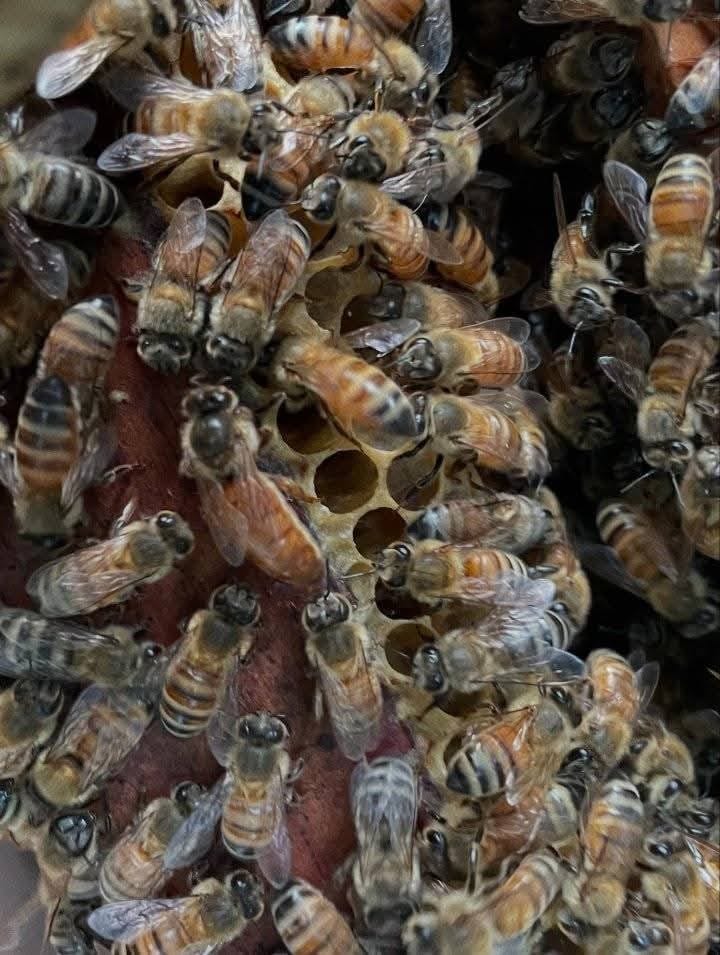
The Apiary Masterclass: Why, How, and What Bees Build and Consume in the Hive
If you step into the apiary at dawn, the air hums with a focused, rhythmic energy. Over years of managing colonies, checking frames, and extracting liquid gold, one learns that a honey bee hive is not merely a collection of insects; it is a highly sophisticated, singular superorganism. Every behavior—from the chaotic geometry of a fresh swarm to the hyper-efficient chemistry occurring within an individual cell—is driven by an ancient blueprint for survival.
Yet, as beekeepers and educators, we frequently encounter the same core questions from curious enthusiasts, homesteaders, and new apiarists. Is honey actually bee vomit? Do bumble bees or carpenter bees make honeycombs filled with liquid gold? What do bees actually eat when the winter winds close in?
In this exhaustive guide, we will unpack the biological mechanics, behavioral truths, and ecological realities of the world’s most celebrated pollinators. Drawing directly from firsthand apiary management and contemporary entomological science, we will clear the air of common misconceptions and dive deep into how these incredible creatures function.
1. The Core Purpose: Why Do Bees Make Honey?
To truly answer why do bees make honey and why do the bees make honey, one must understand the metabolic reality of a wintering colony. Unlike many insects that go dormant or survive the freeze as buried eggs or pupae, honey bees (Apis mellifera) stay awake, active, and highly condensed all winter long.
Fueling the Winter Thermoregulation Cluster
When ambient temperatures drop below 57°F (14°C), the colony ceases all external foraging and forms a tight, spherical structural mass called the winter cluster.
- The Mechanics of Heat Generation: The bees tightly pack together over the empty combs, placing the queen at the absolute center. The worker bees then uncouple their flight muscles from their wings. By rapidly flexing these thoracic muscles without flapping their wings, they generate pure kinetic heat.
- The Energy Cost: To maintain a core temperature of up to 93°F (34°C) at the heart of the cluster—even when the outside air drops below zero—requires an astronomical amount of carbohydrate fuel. That fuel is honey. Without an abundant, easily accessible supply of cured honey, the cluster will freeze, starve, and collapse.
Calculating the Annual Hive Budget
A healthy production colony does not collect nectar simply for immediate consumption. They are hyper-producers, hardwired to exploit every major floral bloom to accumulate an immense surplus.
[Average Colony Annual Honey Dynamics]
Total Foraged Nectar: ~300 to 500 lbs
Internal Consumption (Survival/Brood Rearing): ~60 to 80 lbs
Beekeeper Surplus Margin: ~40 to 100+ lbs (depending on climate)
If you have ever wondered what do bees use honey for, it is their primary, non-perishable carbohydrate source. They use it to power their intense flight muscles during foraging seasons, feed developing larvae alongside protein-rich pollen, and fuel the constant metabolic furnace of the hive. This is exactly why bees make honey and what bees do with honey—it is the ultimate energy reserve that guarantees generational continuity across seasons.
2. Chemical Metamorphosis: How a Honey Bee Makes Honey
The transition from a sweet, watery floral secretion to a thick, shelf-stable syrup is a marvel of organic chemistry. The process of how a honey bee makes honey and how bees make honey relies on a clear, step-by-step assembly line of older field bees and younger house bees.
Step-by-Step: From Nectar to Cured Honey
1.Floral Foraging and Inversion Initiation:Field Phase.
The foraging bee visits thousands of flowers, using her tubular proboscis to suck up raw nectar (which is roughly 80% water and 20% sucrose). As the nectar enters her specialized honey stomach, her hypopharyngeal glands secrete the enzyme invertase. This enzyme immediately begins breaking down complex sucrose molecules into simple sugars: glucose and fructose.
2.Trophallaxis and Hive Transfer:Passing the Crop.
Returning to the hive entrance, the forager regurgitates the modified nectar and passes it directly to a younger house bee through a mouth-to-mouth liquid exchange process known as trophallaxis. This transfer exposes the liquid to additional rounds of enzymes within multiple house bees, furthers sucrose inversion, and introduces glucose oxidase.
3.Active Evaporation and Droplet Manipulation:Reducing Liquid Content.
The house bees deposit the raw, watery mixture into open wax cells. To drive down the moisture level rapidly, bees engage in active evaporation. A bee will draw a droplet of nectar up her mouthparts, expose it to the warm, dry air of the hive, and draw it back in, repeating this cycle to maximize the surface-area-to-air ratio.
4.Passive Fanning and Structural Dehydration:Thermoregulation Network.
Teams of worker bees line up throughout the hive corridors and actively fan their wings, generating a powerful, continuous draft across the open combs. This forced air convection pulls remaining moisture out of the nectar cells, dropping the water content down from 80% to a precise threshold below 18.6%.
5.Wax Capping and Hermetic Sealing:Long-term Storage.
Once the moisture analyzer in the bee’s sensory array confirms the honey is fully cured (below 18.6% water), the workers produce a fresh sheet of white beeswax to cap the cell hermetically. This prevents the hygroscopic honey from pulling moisture back out of the humid air, preserving it indefinitely.
The Architectural Blueprint: How Do Honey Bees Make Honeycomb?
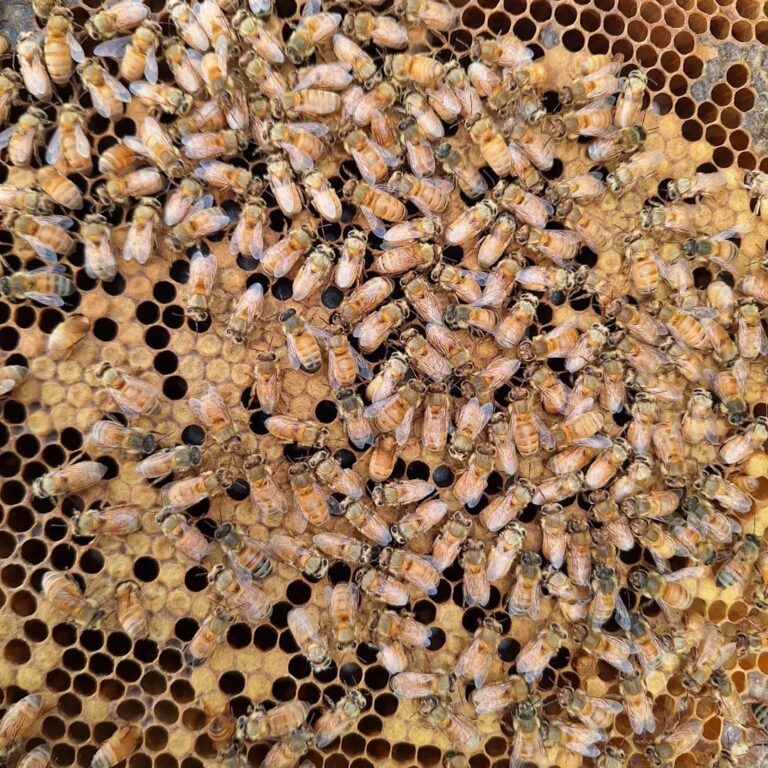
To hold thousands of pounds of curing honey without structural failure, bees construct their storage vessels using precise geometry. Workers between 12 and 17 days old develop active wax glands on the underside of their abdomens. After consuming massive quantities of honey, they secrete thin scales of liquid wax that rapidly harden upon contact with the air.
Using their mandibles, they chew this wax with salivary enzymes to make it malleable, then meticulously build out perfect, back-to-back hexagonal cells. The choice of a hexagon is mathematically perfect: it requires the absolute minimum amount of wax material while providing the maximum possible volume and structural load capacity.
3. Demystifying the Anatomy: Is Honey Bee Vomit?
One of the most persistent online myths is that honey is nothing more than digested bee barf. Let’s look at the actual anatomy to clarify is honey bee vomit, is honey bee puke, and is honey made from bee vomit.
The Definitive Biological Truth: Honey is not bee vomit, nor is it is honey bee barf or is honey bees vomit. Vomit is the product of an animal’s primary digestive tract, containing partially broken-down food, hydrochloric acid, and proteolytic enzymes from the ventriculus (stomach). Honey, by contrast, is held in an entirely isolated organ.
The Divergent Paths of the Bee Anatomy
The honey bee possesses a highly specialized digestive layout that splits her intake into two distinct internal pathways:
- The Proventriculus (The Smart Valve): Located at the terminal end of the honey stomach (or crop), the proventriculus acts as a strict one-way biological filter. It features a microscopic, four-lipped valve lined with hair-like filiform structures that actively strain out pollen grains, fungal spores, and bacteria from the nectar stream, cleaning the fluid before it can enter the true stomach.
- The Crop (The Storage Vessel): This is where nectar is held during flight. It contains zero digestive acids. If the bee needs energy for her own body, the proventriculus opens slightly, allowing a tiny fraction of nectar to pass down into the ventriculus for processing. The rest remains clean, uncontaminated, and ready for clean regurgitation during trophallaxis.
[Intake] -> Proboscis -> Esophagus -> [Crop / Honey Stomach]
                                             |
                   =====================================================
                   |                                                   |
           (Valve Opens)                                        (Trophallaxis)
                   v                                                   v
     [Proventriculus Filter] -> [Ventriculus]                 Passed to House Bee
                   |                                           (Becomes Honey)
                   v
          [True Digestion] -> [Rectum] (Waste)
To complete this anatomical tour, we should also address another odd search query: is honey bee feces? Absolutely not. Fecal matter is the metabolic waste expelled from the rectum after nutrients are absorbed in the intestine. Bees are exceptionally clean animals; they refuse to defecate inside the dark hive environment, instead opting for dedicated outdoor cleansing flights. Honey never comes into contact with the waste management loop of the bee’s body.
4. The Diverse World of Bees: Do All Bees Make Honey?
When people think of bees, they almost always envision a bustling honey bee colony. However, there are over 20,000 described species of bees worldwide. The answer to do all bees make honey and do all bees produce honey is a definitive no. Only a tiny fraction of bee species produce honey, and an even smaller subset produces it in quantities humans can harvest.
Which Bees Make Honey?
| Bee Group / Genus | Honey Production Level | Nesting Style & Colony Architecture |
| Honey Bees (Apis) | Massive Surplus | Perennial colonies, large vertical wax combs |
| Stingless Bees (Meliponini) | Moderate Surplus | Tropical perennial, specialized wax/resin “pots” |
| Bumble Bees (Bombus) | Trace / Minimal | Annual cycle, small messy clusters of egg pods |
| Carpenter Bees (Xylocopa) | Zero | Solitary tunnels bored directly into dead timber |
| Mason Bees (Osmia) | Zero | Solitary mud-lined tubes, individual pollen loaves |
Evaluating Specific Species
Do Bumble Bees Make Honey?
If you look up do bumble bees make honey or can bumble bees make honey, you will find that while they do collect nectar, they do not make true, shelf-stable honey. Bumble bee queens start a brand-new colony completely from scratch every spring. Because their colony numbers rarely exceed a few hundred individuals and completely dissolve before winter hits, they have no biological need for massive storage. They store raw, un-ripened nectar in small, fragile wax structures known as “honey pots,” but only keep a few days’ worth of reserves on hand to get through rainy spring afternoons.
Do Carpenter Bees Make Honey?
Queries like do carpenter bees make honey and do carpenter bees produce honey lead to a quick biology lesson on solitary insects. Carpenter bees do not live in colonies, have no workers, and construct no shared honey stores. Instead, a single female bores a long tunnel into wood, creates individual cell chambers, packs a small, solid ball of mixed pollen and nectar (called a “pollen loaf”), lays a single egg on it, and seals it up. They produce absolutely zero liquid honey.
Do Killer, Africanized, and Wild Offshoots Produce Honey?
Let’s look at the more aggressive or specialized lineages:
- Do killer bees make honey? / Do killer bees produce honey? Yes. “Killer bees” is the sensationalized name for Africanized honey bees (Apis mellifera scutellata hybrids). They are highly proficient honey producers. In fact, they are known for hyper-accelerated foraging rates, though their extreme defensiveness and tendency to abscond make them notoriously difficult to manage in standard apiaries.
- Do africanized bees make honey? / do africanized bees produce honey? Yes, their honey production mechanics are identical to European honey bees. However, they allocate more energy into rapid swarming cycles rather than storing multi-year surpluses.
- Do sweat bees make honey? No. Halictidae species are solitary or primitively social; they collect pollen and nectar only to form tiny larval provisions.
- Do vulture bees make honey? / is vulture bee honey edible? / what does vulture bee honey taste like? / where to buy vulture bee honey? This is one of the strangest anomalies in nature. Vulture bees (Trigona) are stingless tropical bees that have abandoned a vegetarian lifestyle. Instead of gathering pollen, they feed on carrion (dead flesh). They use specialized gut bacteria to process this protein and store a molasses-like substance in their hives. While it is technically edible and described as intensely sweet with a deeply rich, smoky, or savory profile, it is extremely rare, localized to deep neotropical rain forests, and not commercially available for purchase.
5. Daily Life and Lifespans inside the Hive
The timeline of a honey bee’s life is a rigid cascade of tasks, dictated by age, hormones, and seasonal demands. To answer how long do honey bees live, how long can a honey bee live, and what is the lifespan of a honey bee, we must look closely at their complex lifecycle.
The Lifecycle Framework: A Honey Bee’s Life Cycle
[Egg] -> Day 3 Hatch -> [Larva] -> Day 9 Sealed -> [Pupa] -> Day 21 Emergence (Worker)
Upon chewing her way out of her wax cell, a female worker bee’s life is split into two distinct occupational phases: internal hive duties (house bee) and external collection duties (field bee). This progression shapes a life cycle of a honey bee and a honey bees life cycle.
[House Bee Phase: Days 1-20]
Cell Cleaning -> Nurse Bee (Feeding Larvae) -> Comb Building -> Attending the Queen -> Guarding the Entrance
                    |
                    v
[Field Bee Phase: Days 21-Death]
Foraging for Nectar, Pollen, Water, and Propolis
The Seasonal Lifespan Divide
When evaluating how long do honey bees live for or what’s the lifespan of a honey bee, the answer shifts dramatically depending on when the bee emerges from her pupa.
- The Summer Worker (The High-Octane Engine): Emerging during the peak of the foraging season, a summer worker lives for just 4 to 6 weeks. She literally works herself to death. Her wings eventually become frayed, her flight muscles wear down, and she dies in the field while carrying a heavy load of forage.
- The Winter Worker (The Long-Lived Survivor): Workers born in late autumn are biologically distinct. Because there is no active brood to feed or endless fields to forage, their bodies preserve high levels of vitellogenin—a crucial storage protein held in their fat bodies. These “diapiu”-like winter bees can live for 4 to 6 months, allowing them to survive the bitter winter cold and care for the first spring larvae before passing away.
- The Drone (The Male Alternative): What are male honey bees called? They are called drones. Drones possess massive eyes and robust bodies designed for one single evolutionary purpose: to track down and mate with a virgin queen in mid-air at a drone congregation area. Drones have no stingers, cannot forage, and cannot produce wax. They live for a few summer months, but if they fail to mate, they face a grim fate. As autumn approaches and resources dwindle, the workers ruthlessly drag the drones out of the hive entrance to starve, conserving valuable honey stores for the core cluster.
[Summer Worker]  =====> 4 to 6 Weeks (Dies of pure exhaustion)
[Winter Worker]  =========================================> 4 to 6 Months (Conserves energy)
[Drone Male]     ===========> Coexists in Summer (Evicted in Autumn)
[Queen Bee]      ======================================================================> 2 to 5 Years
The Ultimate Identity: What Does a Queen Honey Bee Look Like?
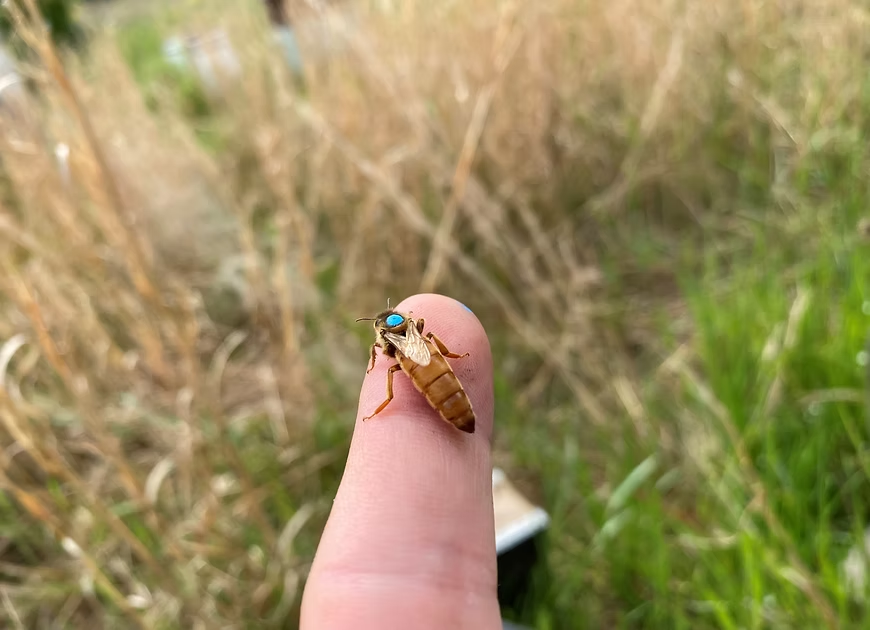
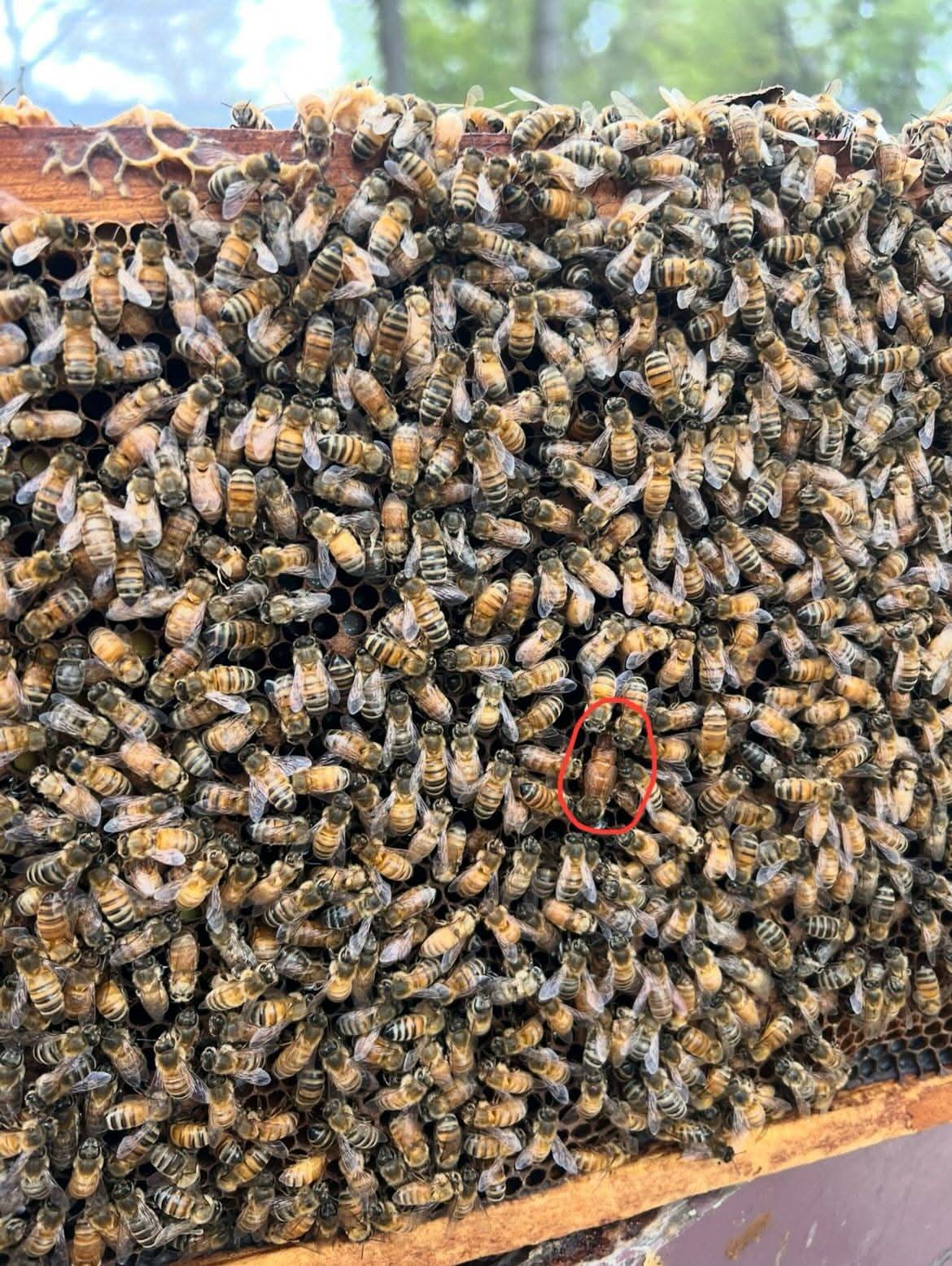
To spot the mother of the hive, you have to train your eyes to scan past thousands of workers. When asking what does queen honey bee look like, what does a honey bee queen look like, or what does the queen honey bee look like, you are looking for an insect that stands out structurally.
The queen is significantly longer than a standard worker bee. Her abdomen is elongated, sleek, and extends well past the tips of her folded wings. Her thorax is smooth, broad, and lacks the dense hair found on workers, while her legs are thick and un-fitted with pollen baskets. She moves with a slow, deliberate majesty across the comb, always surrounded by a dedicated retinue of attendant workers who groom her, feed her royal jelly, and clean up her waste as she fulfills her duty of laying up to 2,000 eggs per day.
6. The Honey Bee Nutritional Profile: What Do They Eat?
To maintain their high metabolic outputs, bees require a perfectly balanced diet of carbohydrates, proteins, lipids, and micronutrients. Understanding what do honey bees eat, what do honey bees eat for food, and what does the honey bee eat helps reveal why they work so hard to gather resources.
The Dual-Fuel System
[The Honey Bee Nutrition Paradigm]
Carbohydrates (Energy) <=======> Honey & Nectar
Proteins & Lipids (Growth) <===> Bee Bread (Fermented Pollen)
- Carbohydrates (Energy): Raw nectar and fully cured honey provide the immediate sugars needed to fuel their flight muscles, which must beat at over 200 strokes per second. If a colony runs out of honey during a cold snap, they will starve within hours.
- Proteins, Fats, and Minerals: While honey fuels movement, it cannot build tissue. For that, bees collect pollen. Workers pack raw pollen into cells, mixing it with small amounts of nectar and glandular secretions. This mixture undergoes a lactic acid fermentation process to become bee bread. This stable form of protein is highly digestible and essential for nurse bees to produce the protein-rich royal jelly used to feed young larvae.
Do Bees Feed on Their Own Honey Store?
Yes, do honey bees eat honey, do bees eat honey, and do bees eat the honey are common questions with a straightforward answer. Honey is their primary survival food. They consume it continuously. A worker bee will dip her head deep into a capped cell, chew through the wax sealing, and lap up the rich syrup to refuel. In fact, if you want to understand do bees like honey, they are highly protective of it. If a neighboring colony or a hungry wasp attempts to enter the hive to steal their stores, guard bees will defend their honey frames to the death.
7. The Visual Guide: What Do Honey Bees Look Like?
To identify these insects accurately in your garden, you must separate them from looking like similar flying pests like yellowjackets, hornets, or hoverflies. Let’s look at what do honey bees look like and what does honey bees look like.
Key Morphological Markers
A honey bee (Apis mellifera) is typically about 0.5 to 0.6 inches long, featuring a distinctly furry body that sets them apart from the smooth, shiny skin of wasps. Their coloration is not a striking, bright neon yellow; rather, it consists of subtle, alternating bands of rich amber-brown and dark charcoal gray.
They possess a broad, dark brown thorax covered in fine hair, and a somewhat flattened abdomen. On their hind legs, female workers feature a highly specialized structure called a corbicula (or pollen basket)—a smooth, slightly concave zone ringed with stiff hairs designed to lock large balls of brightly colored pollen securely in place during flight.
The Sensory Array: How Many Eyes Does the Honey Bee Have?
If you look closely at a worker’s head, you will discover she has exactly five eyes.
- Two Large Compound Eyes: Positioned prominently on the sides of her head, these eyes are made up of thousands of individual facets called ommatidia. They excel at detecting rapid movement, separating polarized light patterns for navigation, and seeing colors deep into the ultraviolet spectrum (which highlights hidden nectar guides on flower petals), though they cannot see the color red.
- Three Ocelli (Simple Eyes): Arranged in a tiny, triangular pattern right on the crown of her head, these simple lenses cannot form clear images. Instead, they function as an advanced light meter, helping the bee monitor light intensity changes to navigate relative to the sun, track the horizon during flight, and detect oncoming overhead predators.
8. Managing and Attracting Colonies: An Apiary Guide
For landowners, gardeners, and aspiring homesteaders, transitioning from appreciating bees to actively managing them is an incredibly rewarding journey. Let’s break down how to get started safely and successfully.
How to Start a Honey Bee Hive: Step-by-Step
If you are researching how do i start a honey bee hive, how to start a honey bee hive, how to raise honey bees, how do you raise honey bees, or how to start a honey bee farm, you need a clear blueprint before bringing your first colony home.
[Phase 1: Winter Prep] -> Order Hardware & Reserve Bees (Nuc/Package)
[Phase 2: Early Spring] -> Assemble Woodenware & Set Up Apiary Site
[Phase 3: Mid-Spring] -> Install Bees into Hive & Provide Sugar Syrup
[Phase 4: Summer Management] -> Regular Inspections & Mite Monitoring
- Acquire Your Protective Gear and Hive Components: Do not skimp on safety. Secure a high-quality, ventilated bee suit, heavy-duty leather gloves, a reliable smoker, and a sturdy hive tool. For your hive setup, standard 10-frame Langstroth boxes are an excellent choice for beginners due to their wide availability and ease of expansion.
- Order Your Living Entities Safely: Beginners should look up where to buy honey bees, where to order honey bees, or where to purchase honey bees early in the winter season. You can purchase bees in two primary configurations:
- A Package of Bees: A screened wood box containing roughly three pounds of loose bees and an un-related queen held inside a small cage.
- A Nucleus Colony (Nuc): A miniature, active five-frame starter colony complete with an established queen, drawing comb, developing brood, and active honey stores. Nucs have a massive developmental advantage and are highly recommended for new apiarists.
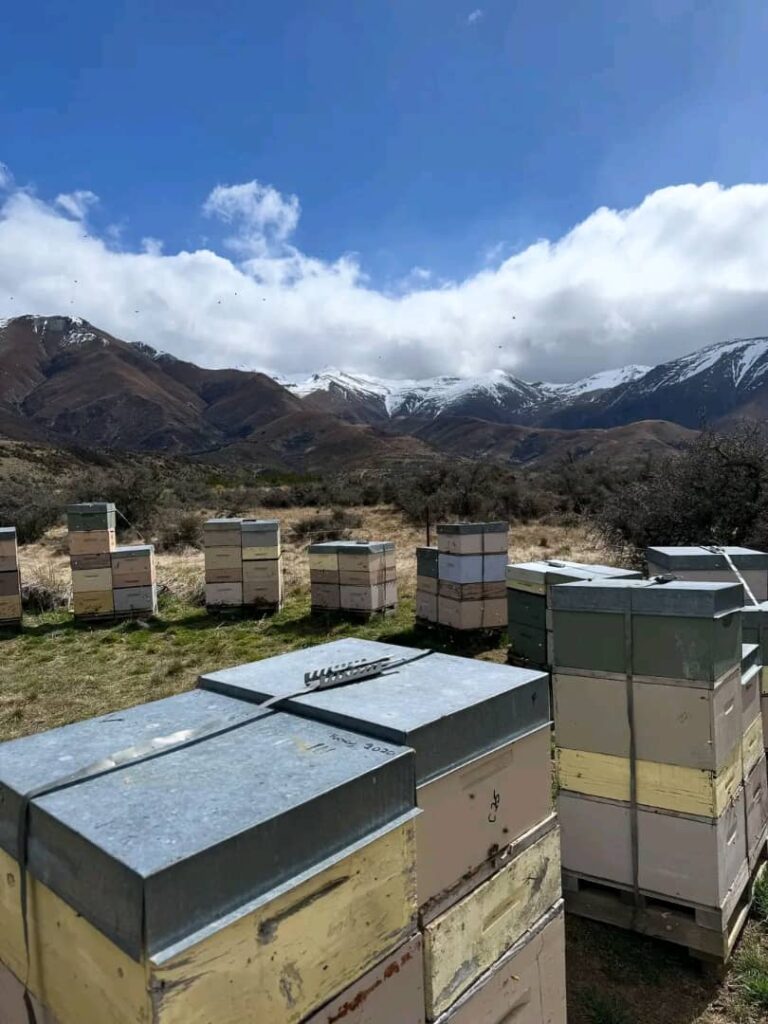
- Select an Ideal Apiary Site: Position your hives facing east to catch the early morning sun, which encourages foragers to start working early. Ensure the location has solid wind protection from northern drafts, sits on clear, dry ground that won’t flood, and offers a continuous, nearby clean water source so the bees don’t end up visiting your neighbor’s swimming pool.
- Install and Feed Your New Colony: Once your bees arrive in mid-spring, carefully transfer the frames into your full-sized hive body. Provide them with a steady supply of 1:1 white sugar syrup using an internal feeder to help them rapidly build out fresh wax combs.
How to Attract Honey Bees to Your Garden
If you aren’t ready to manage managed hives but want to help local populations, focus on how to attract honey bees and discover what flowers do honey bees like. Bees are strongly attracted to large, single-color patches of open blossoms.
Plant a diverse mix of native wildflowers that bloom across different seasons, such as Lavender, Sunflowers, Echinacea (Coneflower), Borage, and Clover. Avoid modern double-petal flower varieties, which often block a bee’s access to the nectar glands, and eliminate pesticide sprays in your yard entirely.
9. Understanding Complex Swarming and Safety Behaviors
Beekeeping requires learning to interpret the collective behavior of your colony. When thousands of bees change their daily routine, they are communicating an urgent survival need.
The Phenomenon of the Swarm: Why Do Honey Bees Swarm?
Finding a massive, writhing cluster of bees hanging from a tree branch can be intimidating, but understanding why do honey bees swarm reveals it is a completely natural process. Swarming is simply a healthy colony’s method of reproduction on a macro scale.
When a hive becomes overcrowded in the spring, the old queen lays eggs in specialized vertical queen cups. Just before these new princess larvae hatch, the old queen takes roughly half of the adult worker force, gorges them on honey reserves, and exits the hive in a massive cloud.
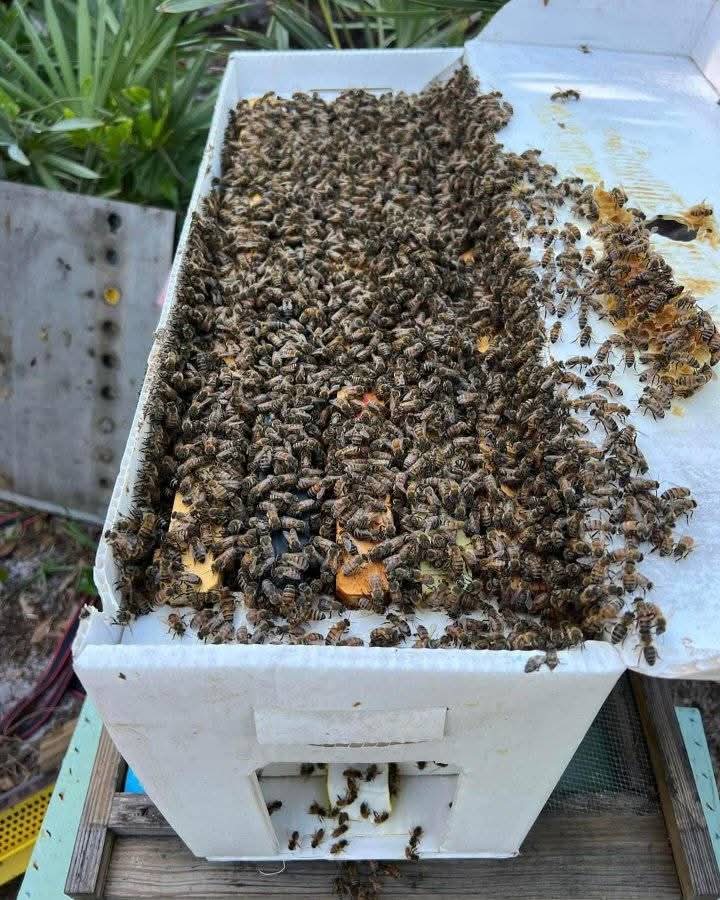
The swarm lands on a nearby branch or structure, forming a temporary cluster while scout bees fly out to find a permanent home, like a hollow tree cavity. Because swarming bees have no home or brood to actively defend and are completely full of honey, they are generally incredibly calm and gentle during this relocation phase.
[Hive Overcrowding] -> [Raise New Queens] -> [Old Queen + 50% Workers Exit] -> [Temporary Swarm Cluster] -> [Scout Locates Cavity] -> [Move to New Home]
Addressing Nuisance Hives and Extraction Realities
Sometimes wild swarms choose inconvenient locations, leading to queries like how can i get rid of honey bees, how to remove honey bee, how to exterminate honey bees, how to kill honey bees, or how can i kill honey bees.
Critical Legal and Ecological Warning: Before you consider searching for is it illegal to kill honey bees, is killing honey bees illegal, or how do you kill honey bees, know that honey bees are vital agricultural assets. In many regions, spraying or killing feral colonies inside structures is strictly regulated. Extermination should be your absolute last resort. It leaves massive walls of abandoned honey and wax inside your walls, which will melt, rot, attract pests, and cause severe structural damage to your home.
Instead of looking up what kills honey bees or what kills honey bees instantly, you should always contact a local beekeeping association or a professional live bee removal specialist. They can perform a clean live cut-out extraction, using specialized vacuums to safely relocate the colony into a managed hive body without harming the insects or leaving structural messes behind.
Common Flight Inquiries
Do Honey Bees Live in the Ground?
If you notice insects entering holes in your lawn, you might ask do honey bees live in the ground, do honey bees nest in ground, does honey bees live in the ground, or do bees make honey in the ground. Honey bees do not live or make honey underground. If you see bees nesting in the turf, you are likely looking at solitary, native ground-nesting bees (like mining bees or sweat bees) or social yellowjacket wasps. The only exception is if a wild honey bee swarm discovers an abandoned rodent burrow with an open cavity, but this is a rare occurrence.
Do Ground Nesting Bees Make Honey?
No, do ground nesting bees make honey is a simple no. These native species are solitary and do not accumulate shared winter honey surpluses.
How Far and Fast Do They Fly?
- How far does a honey bee travel? Foragers regularly fly within a 2 to 3-mile radius of their hive to gather resources, and can push up to 5 miles if forage is scarce.
- How fast can a honey bee fly? / how fast do honey bees fly? An unladen worker flies at roughly 15 to 20 miles per hour, dropping to about 12 miles per hour when weighed down with pollen and nectar.
- Where do honey bees go in the winter? / where do honey bees go in winter? They never migrate or hibernate. They stay inside their hive boxes, locked into the winter thermoregulation cluster we discussed earlier.
- Do honey bees die in the winter? Individual elderly bees do pass away and are carried out on warmer days, but the core colony survives the freeze together.
10. Defense and Stinging Realities: Can a Honey Bee Sting?
Understanding bee defense mechanisms is essential for a safe, comfortable apiary experience. Honey bees are generally non-aggressive insects that only resort to violence when their home or life is explicitly threatened.
- Can a honey bee sting? / will a honey bee sting you? Yes, a female worker bee will sting if she is pinched, stepped on, or if you stand directly in the flight path of an angry colony’s hive entrance.
- Do honey bees bite or sting? They sting using a modified ovipositor (egg-laying organ) turned into a weapon. They do possess mandibles, but use them only for chewing wax, grooming, or evicting unwanted pests from the hive.
- Do honey bees die after they sting? Yes. A honey bee’s stinger is heavily barbed, like a tiny fishhook. When she stings a mammal with soft skin, the barbs lock firmly into the flesh. As she flies away, the entire stinging apparatus—including the venom sack and attached muscles—is torn from her abdomen, causing a fatal injury.
- Can honey bees sting more than once? They can only sting once when defending against humans or mammals. However, if they are fighting off invading wasps or rival bees with thin chitinous skin, their stinger does not get stuck, allowing them to sting multiple times.
- What does a honey bee sting look like? It appears as a small, red, raised wheal on the skin, with a tiny black stinger mechanism still pumping venom at the center. Scraping this stinger away quickly with a fingernail or credit card is key to minimizing irritation.
[Stinger Penetrates Skin] -> [Barbs Lock in Place] -> [Bee Pulls Away] -> [Apparatus Detaches] -> [Bee Dies]
                                                                        |
                                                                        v
                                                            [Venom Sac Continues Pumping]
11. Ecological Conservation and Health Realities
To wrap up our masterclass, let’s address the broader relationship between honey bees, human health, and global ecosystems.
Are Honey Bees Endangered?
The question are honey bees endangered, are the honey bees endangered, or are honey bees an endangered species features a surprising twist. Managed western honey bees are not endangered. While beekeepers face real challenges with parasitic Varroa mites, changing weather, and pesticide usage, the overall number of managed hives worldwide has grown significantly over the last few decades.
The species truly at risk are our native, solitary wild pollinators—such as native bumble bees, leafcutter bees, and mason bees—who must compete for resources and face habitat loss.
Origins and Impact
- Are honey bees native to north america? / are honey bees native to the us? / are honey bees invasive to north america? / where did honey bees come from? / where did honey bees originate? Honey bees are not native to the Americas. They were brought over by European colonists in the early 17th century. While they are an introduced species, they are categorized as naturalized agricultural partners rather than destructive invasive pests, though managing hive density near sensitive conservation areas is an important consideration.
- What is the scientific name for honey bees? Its official name is Apis mellifera, which translates to “honey-bearing bee.”
- What eats honey bees? They are a protein-rich food source targeted by many wild predators, including bears, skunks, birds (like flycatchers), mantises, and large hornets.
Dietary Safety and Allergies
For consumers, a common point of confusion is whether bee allergies impact honey consumption. If you explore can you eat honey if you’re allergic to bees, can you eat honey if allergic to bees, or can people allergic to bees eat honey, the answer is generally yes for the vast majority of individuals.
An allergy to bee stings is a localized or systemic response to the venom peptides injected directly into your bloodstream through a sting. Honey contains sugars, plant compounds, and tiny traces of pollen, but no venom proteins. However, if you suffer from severe anaphylactic reactions, consulting your primary care physician or allergist before introducing raw, unfiltered honey products into your diet is always the safest approach.
Summary Reference Table
To keep these essential facts handy, use this quick reference table for your apiary planning:
| Metric / Term | Biological Value | Practical Significance for Apiaries |
| Ideal Honey Moisture | Strictly Below 18.6% | Prevents wild yeast fermentation and spoiling |
| Summer Worker Lifespan | 4 to 6 Weeks | Requires a high-laying queen to maintain workforce |
| Winter Worker Lifespan | 4 to 6 Months | Sustains the cluster until the first spring hatch |
| Visual Compound Eyes | 2 Large Lateral Eyes | Detects UV nectar markings and motion patterns |
| Visual Simple Eyes (Ocelli) | 3 Top Crown Lenses | Acts as a fast light-meter for solar flight navigation |
| The Smart Valve | Proventriculus | Isolates raw forage from true digestion tract |
By understanding the incredible biology, dietary requirements, and behavioral patterns of Apis mellifera, you can manage your hives with confidence, build sustainable apiary spaces, and enjoy the delicious rewards of your own backyard honey harvest. For high-quality supplies, starter colony resources, and deeper seasonal beekeeping strategies, explore the latest guides over at Golden Hive Farm.
Newsletter Updates
Enter your email address below and subscribe to our newsletter