Step onto the grounds of a high-performance apiary or walk through a wild forest ecosystem, and you will find yourself surrounded by a complex web of insect behavior. To the average consumer browsing local market shelves, honey is a single, delicious commodity. But to the entomologist, small farmer, or professional content strategist, honey is a remarkable evolutionary survival mechanism.
When people search for do bees produce honey, why do bees produce honey, or how bees produce honey, they are digging into a deep biological story. It is a story of incredible physical effort, advanced chemistry, and distinct evolutionary differences across thousands of insect species.
Achieving true digital authority in search engine rankings requires leaving behind basic, high-level answers. This definitive guide provides an exhaustive, deeply informative exploration of global honey production.
We will look at the exact mechanisms of how honey is produced by bees, debunk common myths about species like carpenter and mason bees, look closely at individual lifetime yields, and establish a clear baseline of apiary knowledge.
Whether you are looking to optimize your land or simply want to understand the nature of wild pollinators, you can find premium, cold-hardy starter stocks and master-crafted management tools directly at Golden Hive Farm. Let’s dive deep into the fascinating science of honey production.
1. The Definitive Answer: Do All Bees Produce Honey?
When building a comprehensive understanding of the family Apidae, we have to start by answering a major public question: do all bees produce honey and what bees produce honey?
The Short Answer: A Biological Minority
The clear biological answer is no. Out of the roughly 20,000 distinct species of bees identified across the globe, only a very small percentage—less than 5%—produce true, liquid honey.
[GLOBAL BEE SPECIES FOOTPRINT]
 _________________________________________________________________
│                                                                 │
│  95% Non-Honey Producers (Solitary, Ground-Nesters, Parasitic)  │
│  e.g., Leafcutters, Mason Bees, Carpenter Bees, Sweat Bees       │
│                                                                 │
│_________________________________________________________________│
 [5% True Honey Producers] ──> Apis (Honey Bees) & Meliponini (Stingless)
The overwhelming majority of bee species are completely solitary. They live individual lives without hives, workers, or central queens. Because they do not maintain a permanent, multi-generational colony through the freezing winter months, they have no evolutionary need to gather, process, and store massive amounts of concentrated carbohydrates.
Defining True Honey
To understand which bees produce honey, we have to define what true honey actually is from a chemical and regulatory standpoint. True honey is not just raw flower nectar tucked away in a cell.
It is a specific, highly altered substance. It is a dense, shelf-stable syrup created when bees invert complex plant sugars using specialized enzymes, and then drive the moisture content down below 18.6% through active evaporation.
Any insect substance that does not undergo this specific chemical change and moisture reduction is not true honey; it is simply stored, raw nectar.
2. Species Breakdown: Which Bees Produce Honey and Which Do Not?
To clear up common search trends like do carpenter bees produce honey, do mason bees produce honey, and do sweat bees produce honey, let’s take a closer look at how different bee groups handle food storage.
The True Producers: Managed and Wild Social Lineages
1. True Honey Bees (Genus Apis)
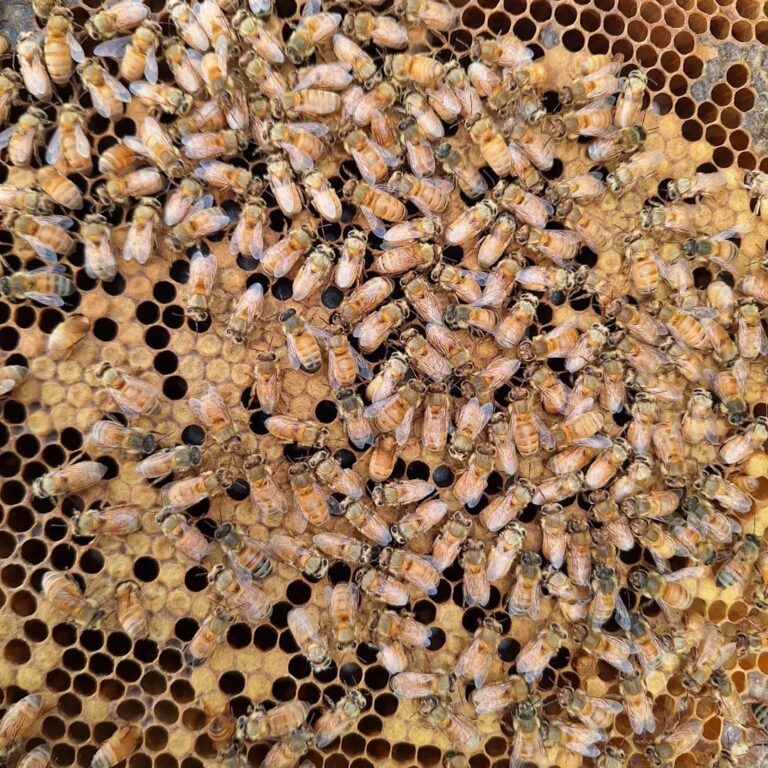
This is the premier group responsible for the vast majority of the world’s honey supply. This genus includes the western honey bee (Apis mellifera) and the eastern honey bee (Apis cerana). These bees build vertical, double-sided hexagonal wax combs and gather a massive honey surplus to feed their large perennial colonies all winter long.
2. Stingless Bees (Tribe Meliponini)
Found primarily in tropical and subtropical regions, these unique social bees do not build standard vertical combs. Instead, they store a distinct, tangy, and more liquid honey inside large, egg-shaped pots made of cerumen—a natural blend of beeswax and plant resins. While their overall harvest yields are much lower than the genus Apis, their honey is highly prized for its unique medicinal properties.
3. Africanized or “Killer” Bees
Addressing the frequent queries do africanized bees produce honey and do killer bees produce honey, the answer is a definitive yes. Africanized honey bees are highly effective, aggressive honey producers.
Because they are a hybrid of African Apis mellifera scutellata and various European subspecies, they fly earlier in the morning, work later into the evening, and forage across a wider footprint than standard Italian strains. However, their hyper-defensive behavior and tendency to pack up and swarm at a moment’s notice make them a real challenge to manage in traditional apiaries.
The Non-Producers: Solitary and Annual Specialists
Do Carpenter Bees Produce Honey?
The high search interest around do carpenter bees produce honey reveals a common mix-up. Carpenter bees (Xylocopa) look very similar to large bumble bees, but they produce absolutely no honey.
They are entirely solitary insects. The female chews clean, perfectly round tunnels directly into dead wood or structural timber. She then creates individual nursery rooms, packs each one with a firm ball of pollen mixed with raw nectar (known as a “pollen loaf”) to feed a single larva, lays her egg, and seals the chamber. They do not build a shared nest or store any liquid honey.
Do Mason Bees Produce Honey?
Queries like do mason bees produce honey are also very common. Mason bees (Osmia) are exceptional, hard-working spring pollinators, but they do not make honey.
They build their nests inside narrow reeds, hollow plant stems, or pre-existing beetle holes in wood. Like carpenter bees, they accumulate a small, damp mass of pollen and raw nectar to nourish their developing young, sealing each chamber with wet mud. Because they do not live in social groups or overwinter as an active colony, they have zero need for honey stores.
Do Sweat Bees Produce Honey?
When exploring do sweat bees produce honey, we find the same pattern. The family Halictidae contains thousands of small, often metallic-colored bees.
While a few species show basic forms of social behavior, they are overwhelmingly solitary or ground-nesting. They gather tiny amounts of nectar and pollen to feed their immediate offspring, but they completely lack the specialized enzymes, abdominal wax glands, and social structure required to produce cured honey.
3. Evolutionary Purposes: Why and Why Does Bees Produce Honey?
To fully answer why do bees produce honey and why does bees produce honey, we have to look closely at the survival strategies of social insects. Honey is not a casual byproduct of a bee’s daily routine; it is a vital, carefully manufactured fuel supply.
Surviving the Cold with the Perennial Strategy
The primary reason honey bees produce honey is to sustain their population through cold seasons when flowers are completely gone. While other social insects like yellowjackets and hornets allow their entire colony to die off in the autumn—leaving only a single mated queen to hibernate safely underground—honey bees keep their entire multi-generational colony alive throughout the winter.
                  [THE COLONY OVERWINTERING LOOP]
 __________________________________________________________________
│                                                                  │
│  Outside Temperature Drops Below 57°F (14°C)                     │
│  ├── Workers form a tight Cluster over the central brood combs    │
│  ├── Bees uncouple flight muscles to flex and generate body heat │
│  └── Colony Core Temperature Maintained at a stable 93°F (34°C)   │
│                                                                  │
│  [CRITICAL FUEL REQ] ──> Continuous consumption of cured honey   │
│__________________________________________________________________│
To keep the core of the cluster at a steady 93°F (34°C)—even when external temperatures drop far below freezing—workers must flex their massive thoracic muscles continuously without moving their wings. This constant metabolic work requires an immense, easily accessible source of pure carbohydrates. That is exactly why they store honey. Without thousands of cells filled with cured, energy-dense honey, the cluster would run out of fuel, drop below its safe temperature, freeze, and perish.
The Biological Insurance Policy
A common question among beginners is whether bees intentionally produce an extra surplus for human harvest. The reality is that bees are driven by an evolutionary urge to gather as much food as possible during a major nectar flow.
This behavior acts as a biological insurance policy. In the wild, a colony might face multi-year droughts, extended rainy seasons, or late-season frosts that wipe out local flowers. By over-producing honey whenever resources are plentiful, the hive ensures its long-term survival against unpredictable environmental shifts.
4. The Production Line: How Does Honey Bee Produce Honey?
The transformation of thin, perishable plant secretions into a thick, shelf-stable syrup is an incredible biochemical and physical process. The steps explaining how bees produce honey, how does honey bee produce honey, and how does a bee produce honey follow a highly efficient assembly line.
The Step-by-Step Production Process
1.Nectar Sourcing and Crop Inversion:Action: Field Foraging.
An older field bee lands on a blossom and sips raw nectar using her long proboscis. As the liquid passes into her honey stomach (crop), her hypopharyngeal glands secrete the enzyme invertase. This biological catalyst immediately begins breaking down the complex sucrose disaccharides into simple, easily digestible monosaccharides: glucose and fructose.
2.Trophallaxis and Enzyme Enrichment:Action: Hive Return.
Back at the hive, the field bee regurgitates the modified liquid and passes it directly to a younger house bee via a mouth-to-mouth fluid transfer called trophallaxis. The house bee processes the fluid further, introducing more enzymes, including glucose oxidase, which converts a portion of the glucose into gluconic acid and hydrogen peroxide, establishing a highly acidic, anti-microbial barrier.
3.Macro-Moisture Reduction:Action: Active Evaporation.
The house bee finds a well-ventilated section of the hive and manipulates a small droplet of the liquid back and forth across her mouthparts. By exposing the fluid to the warm, dry air of the hive, she rapidly drives down the initial water content.
4.Wing-Fanning Dehydration:Action: Forced Convection.
The partially thickened liquid is deposited into open wax cells. Teams of worker bees line up at the hive entrance and across the combs, syncing their wingbeats to create a powerful, continuous air draft. This forced air pull draws remaining moisture out of the open cells, bringing the final water content safely below 18.6%.
5.Wax Capping and Hermetic Sealing:Action: Storage Lock.
Once internal sensory feedback confirms the moisture level is safe from fermentation, workers seal the cell with a thin cap of fresh beeswax. This airtight seal keeps the highly hygroscopic honey from pulling moisture back out of the damp, humid air, preserving the colony’s energy stores indefinitely.
5. Quantitative Apiology: How Much Honey Does a Bee Produce?
To appreciate the incredible scale of work happening inside a managed colony, we can look closely at production numbers on both an individual and hive-wide level. This addresses queries like how much honey does a bee produce in its lifetime, how much honey does a bee produce, how much honey does one bee produce, and how much can a bee produce.
The Micro Yield of an Individual Worker
An individual worker bee is a remarkably dedicated gatherer, but her individual contribution to the hive’s total honey supply is surprisingly small due to her brief, intense summer lifespan.
$$\text{Lifetime Worker Output} = \frac{1}{12} \text{ of a single teaspoon}$$
Because a summer worker literally works herself to death over a span of 4 to 6 weeks, she can only process a microscopic volume of sugar. To understand how this adds up to full jars of honey, look at the scale of collective labor required:
[THE HONEY PRODUCTION SCALE]
1 Teaspoon of Honey  ──> Requires the combined lifetime labor of 12 worker bees
1 Pound of Honey     ──> Requires ~556 foraging bees flying over 55,000 collective miles
1 Standard Super     ──> Requires millions of individual flower visits across the local foraging zone
The Macro Yield of a Healthy Colony
While an individual bee’s output is small, a strong, healthy colony with a population of 50,000 to 60,000 workers functions as a high-powered production engine. During a major spring nectar flow, a single hive can gather and process anywhere from 4 to 12 pounds of raw nectar per day.
Over the course of a production year, a well-managed apiary can easily yield a harvestable surplus of 60 to 100+ pounds of clean honey, even after leaving plenty behind to ensure the colony can successfully navigate the winter season.
6. Sustainable Management: Setting Up Your Production Apiary
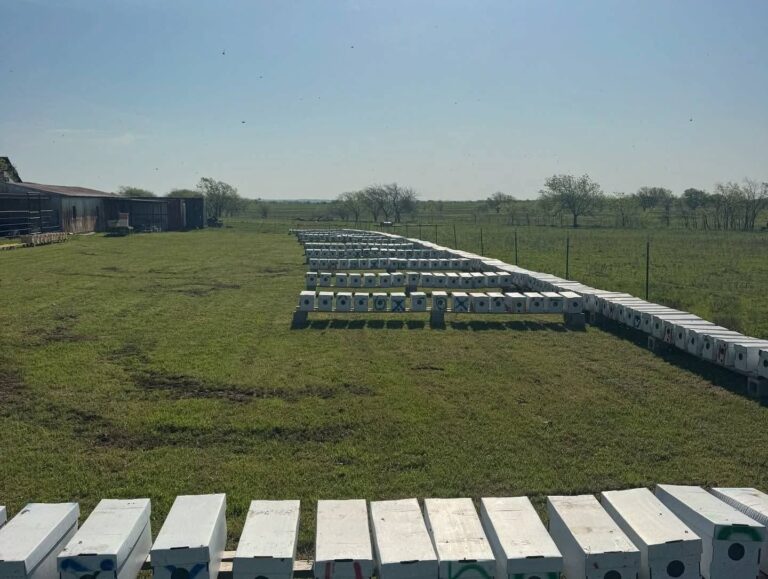
If you want to move past simple research and begin actively managing your own honey production, establishing a backyard or small-scale commercial apiary requires a clear, methodical approach.
Step-by-Step Apiary Installation
[Phase 1: Sourcing] ──────────> Order Premium 5-Frame Nucs & Assembled Woodenware
[Phase 2: Site Optimization] ──> Position Hive Facing East with Solid Wind Barriers
[Phase 3: Colony Support] ────> Feed 1:1 White Sugar Syrup to Drive Rapid Comb Growth
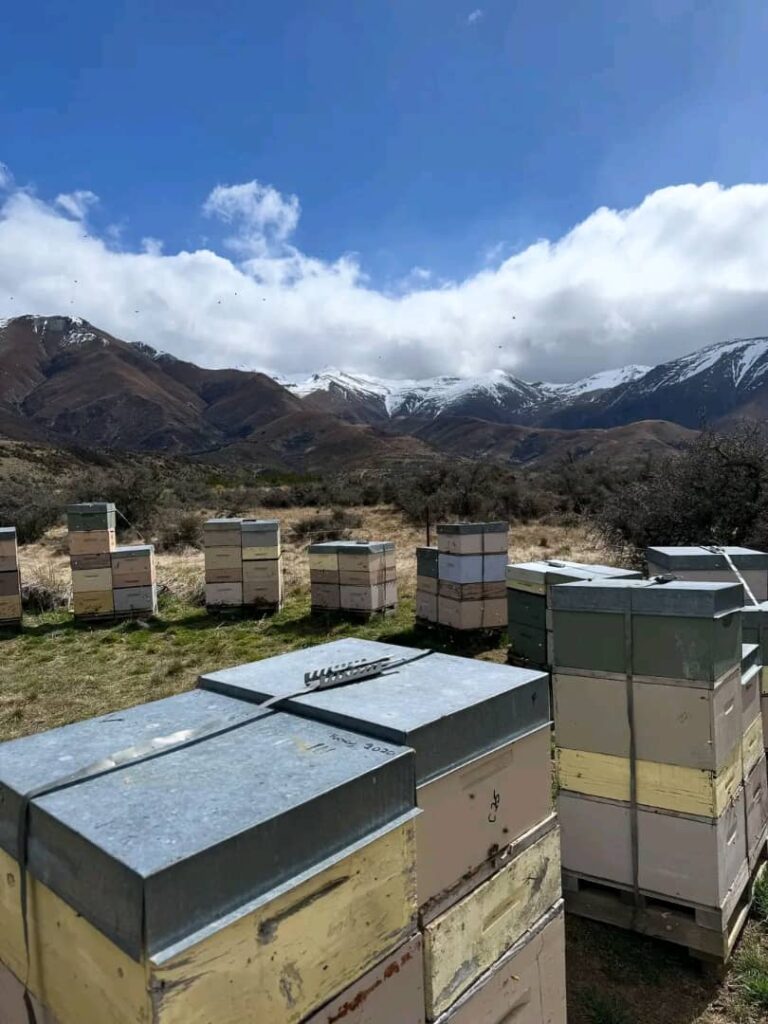
- Invest in Standardized Gear: Stick to high-quality 10-frame Langstroth equipment. This modular system includes solid or screened bottom boards, deep brood boxes, medium honey supers, and a protective inner and outer cover. Make sure your woodenware is fully assembled and painted well before your bees arrive.
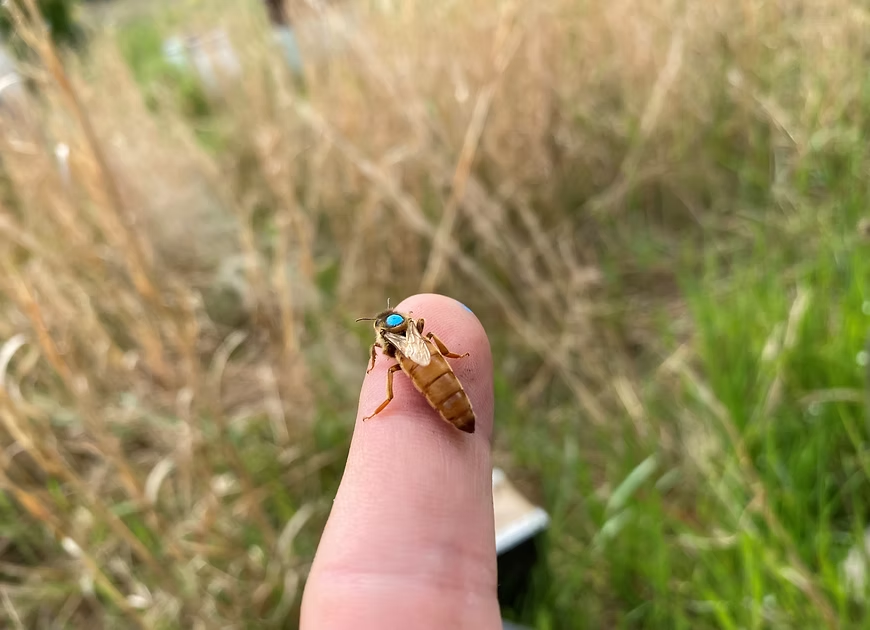
- Source Healthy, Locally Acclimated Stock: Avoid buying low-cost, unverified packages from random online classifieds. Instead, invest in a premium 5-frame nucleus colony (nuc) from an established, reputable breeder. A high-quality nuc gives you a huge head start because it includes a laying queen, drawn wax combs, and active brood right out of the box.
- Choose the Perfect Location: Set up your hive stands facing east to catch the morning sun, which warms the hive entrance and gets your foragers out working early. Ensure the spot has strong protection from cold northern winds, plenty of sunlight, and easy access to a clean water source so the bees don’t bother your neighbors.
- Provide Early Feeding Support: When you install your new colony in the spring, feed them regularly with clean 1:1 white sugar syrup using an internal feeder. This steady energy source helps the young house bees rapidly build out fresh wax combs, giving the queen plenty of space to expand the brood nest.
Ready to launch your own hive? If you are looking to purchase premium, cold-hardy nucleus colonies, high-laying production queens, or professional-grade apiary equipment directly, browse the secure store over atGolden Hive Farmto lock in your gear for the upcoming season.
Technical Reference Directory: Honey Production Dynamics
To help you easily track these essential biological, behavioral, and quantitative details, use this master data table for your apiary planning and research:
| Evaluation Metric | Production Value / Status | Core Biological Significance |
| Primary Raw Ingredient | Floral and Extrafloral Nectar | The essential carbohydrate source used to manufacture true honey |
| Critical Moisture Cap | Must sit safely below 18.6% | The threshold required to stop wild yeasts from causing fermentation |
| Individual Lifetime Yield | Approximately $1/12$ of a teaspoon | Demonstrates why maintaining a large, healthy worker force is vital |
| Carpenter Bee Production | Absolutely zero liquid honey | Solitary insects that focus energy on individual larval pollen loaves |
| Mason Bee Production | Absolutely zero liquid honey | Solitary spring specialists that use mud to seal simple egg chambers |
| Sweat Bee Production | Absolutely zero liquid honey | Ground-nesting or solitary lines that lack honey-curing enzymes |
| Africanized Bee Status | High surplus, aggressive foragers | Highly effective producers that require experienced hive management |
| Main Processing Enzyme | Plant Sucrose Invertase | Breaks down complex double-ring sugars into simple single-ring sugars |
By studying the distinct biochemistry, behavioral traits, and specific structural needs of Apis mellifera, you can manage your hives with complete confidence, protect local pollinator habitats, and get the most out of your seasonal honey harvests. For more expert insights, seasonal management tips, and high-performance equipment, check out our complete library of resources over at Golden Hive Farm.
Deepen Your Apiary Knowledge
- Want a complete guide to spring management? Read our expert breakdown on Swarm Prevention Techniques and Dynamic Hive Splits.
- Unsure how to pick your hive style? Check out our detailed look at Langstroth vs. Top-Bar Hive Setups for Beginning Beekeepers.
Newsletter Updates
Enter your email address below and subscribe to our newsletter