Introduction: Why Italian Honey Bees?
There’s a reason Italian honey bees (Apis mellifera ligustica) are the most popular honey bee stock in the United States and around the world. After more than a decade of beekeeping across multiple climates, I’ve come to appreciate what makes these golden insects so special. They’re not just productive—they’re a pleasure to work with.
When I first started beekeeping, I made the mistake of thinking all bees were essentially the same. I was wrong. The choice of stock affects everything: your honey yield, your management style, your winter survival rates, and most importantly, your enjoyment of the craft. Italian bees transformed my apiary from a stressful chore into a genuine passion.
Whether you’re a beginner considering your first hive or an experienced beekeeper looking to expand, understanding the Italian honey bee is essential. This guide draws on years of hands-on experience, insights from extension services, and the latest research to give you the complete picture.
History and Origin: From the Italian Alps to the World
The Italian honey bee is endemic to the continental part of Italy, south of the Alps, where it survived the last ice age. On Sicily, a related subspecies (Apis mellifera siciliana) evolved separately. The Italian bee that beekeepers know today originates primarily from the Ligurian Alps in northern Italy—which is why they’re sometimes called Ligurian bees.
Italian bees were first introduced to the United States in 1859. At that time, American beekeepers were struggling with the German black bee (Apis mellifera mellifera), which had been brought over by early colonists. The German bee had become ill-tempered, disease-ridden, and difficult to manage. The Italian bee was a revelation.
Thomas White Woodbury first introduced the Italian bee to Britain in 1859 and regarded it as vastly superior to the Old British Black bee. The same sentiment spread quickly across the Atlantic. Italian bees basically replaced the original black or German bee in American apiaries. Today, they remain the most commercially distributed honey bee in the world.
Physical Characteristics: The Golden Beauty
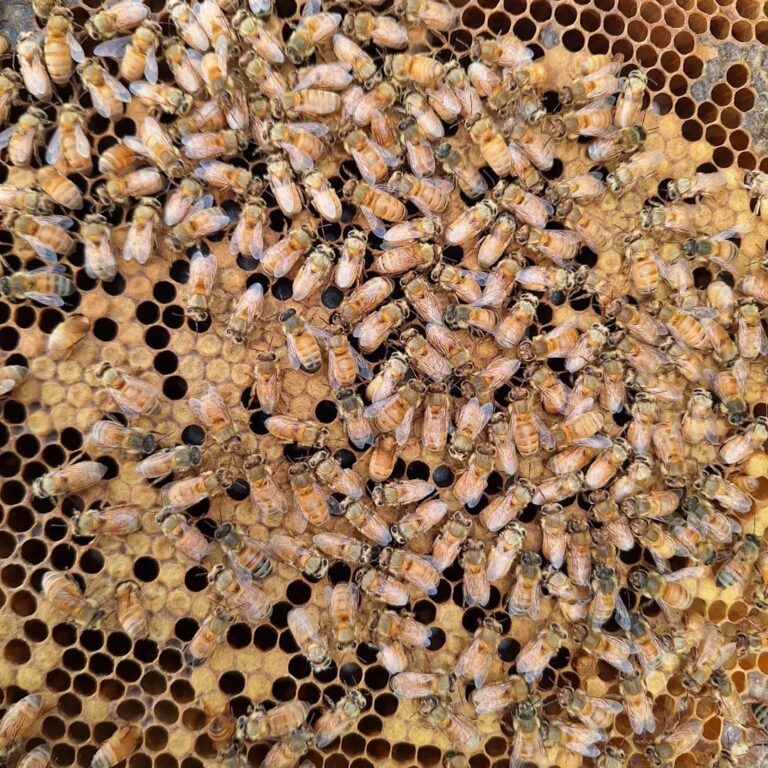
One of the first things you’ll notice about Italian honey bees is their striking appearance. They are light yellowish or brown with alternating stripes of brown and black on the abdomen. Those with three abdominal bands are sometimes called “leather-colored Italians,” while those with five bands are called “goldens” or “cordovan”. Italian bees range from a light leather hue to an almost lemon yellow, a trait highly coveted by many beekeepers for its aesthetic appeal.
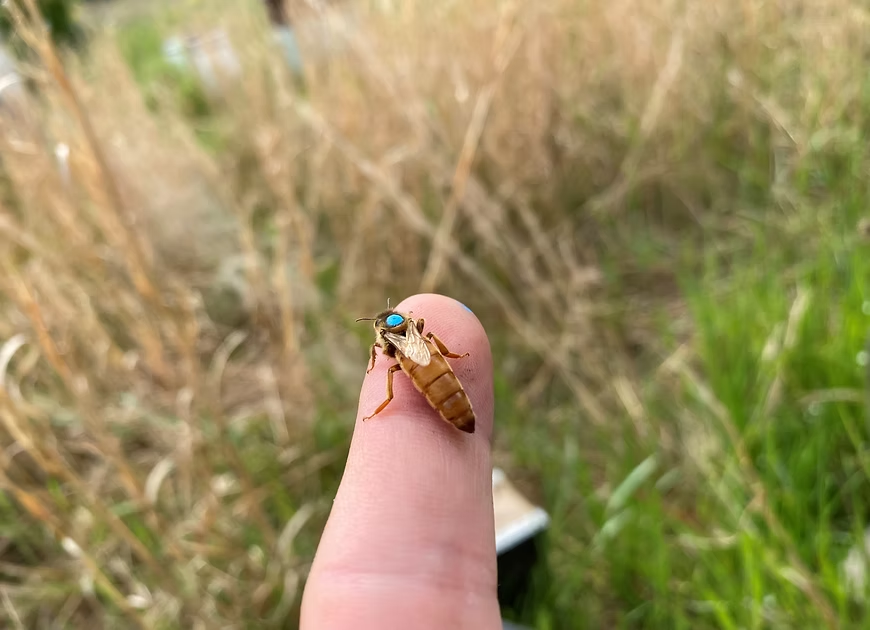
The queen is typically darker than the workers, which makes finding her in the hive considerably easier compared to queens of other races. I can’t overstate how valuable this is during hive inspections. When you’re looking for the queen to confirm she’s laying well, a lighter-colored queen saves you minutes of searching—and less time with the hive open means less stress on the colony.
Italian bees also produce brilliant white cappings on their honey, which are ideal for producing comb honey. If you’ve ever sold honey at a farmers’ market, you know that beautiful white cappings sell themselves.
Temperament: The Gentle Giants of the Bee World
Docile Nature
Italian honey bees are renowned for their calm and gentle temperament, making them the ideal beginner bee. Most strains are considered quiet and gentle on the combs. Their docile nature allows for easier hive management, reducing the likelihood of stings and making inspections, honey harvesting, and maintenance less stressful for both beekeeper and bees.
I’ve worked with aggressive bees before, and let me tell you—there’s nothing quite like the anxiety of opening a hive that might explode with defenders. Italian bees aren’t like that. Under proper handling and light smoke, Italian colonies are typically manageable and forgiving. They are protective of their brood—as all healthy colonies should be—but they are widely regarded as one of the gentlest commonly available honey bee lines.
The Drifting Challenge
Italian bees do have a notable weakness: weaker orientation compared to other races, which results in more bees drifting from one colony to another. This means if you have multiple hives in your apiary, you’ll occasionally find Italian workers wandering into the wrong hive. While this isn’t a deal-breaker, it’s something to be aware of when planning your hive layout.
Robbing Behavior
Italian bees have a strong inclination to robbing, which can aid in the spread of disease. They’re excellent foragers, but when nectar is scarce, they’ll take honey from weaker neighboring hives. This is one of their few genuine drawbacks. As a beekeeper, you need to manage this by ensuring all colonies are strong and by reducing entrances during dearth periods.
Honey Production: Why Italians Excel
Prolific Brood Rearing
Italian bees are known for their extended periods of brood rearing. They tend to start brood rearing early in the spring and continue until late fall, which results in a large population throughout the active season. Italian queens are prolific layers, and the worker bees are attentive caregivers to the developing brood.
This extended brood rearing is a double-edged sword. Large colonies can collect a considerable amount of nectar in a relatively short period—which means more honey for you. But they also require more honey for maintenance during the fall and winter than do the darker races.
Exceptional Honey Yields
When it comes to honey production, Italian bees are hard to beat. They’re industrious insects known for their strong work ethic, efficiently foraging for nectar and producing abundant honey supplies. Research has shown that Italian colonies produce significantly more brood compared to both Pol-line and Russian bees and have significantly more foragers and adult bees on average.
In my experience, a well-managed Italian hive in a good location can easily produce 60-80 pounds of honey in a season, sometimes more. They make the most of every nectar flow.
White Cappings
As mentioned, Italian bees produce brilliant white cappings on their honey. This might seem like a minor detail, but for those producing comb honey or cut-comb sections, it’s a major selling point. The visual appeal of white-capped honey frames is unmatched.
Comparison with Other Bee Stocks
Italian vs. Carniolan
Carniolan bees (Apis mellifera carnica) are the second most popular race in the United States. Here’s how they compare:
- Temperament: Both are gentle, but Carniolans are often described as extremely gentle.
- Brood Rearing: Carniolans overwinter in small clusters but increase rapidly in the spring after the first pollen becomes available. Italians start brood rearing early and continue late.
- Swarming: Carniolans have a higher tendency to swarm due to their rapid spring buildup. Italians have a moderate swarming tendency.
- Winter Hardiness: Carniolans are very economical in food consumption and overwinter well. Italians consume more resources during winter.
- Robbing: Carniolans are not inclined to robbing and have a good sense of orientation. Italians are more prone to robbing.
For colder climates, Carniolans may be the better choice. For consistent honey production and ease of queen finding, Italians have the edge.
Italian vs. Russian
Russian honey bees were developed by the USDA from stock found in the Primorsky Krai region of Russia. They have been exposed to varroa mites for about 150 years and have developed genetic resistance:
- Mite Resistance: Russian honey bees are more than twice as resistant to varroa mites than other honey bees. They are also highly resistant to tracheal mites.
- Brood Rearing: Russian bees do not build colony populations until pollen is available and shut down brood rearing when pollen is scarce. Italians maintain brood rearing throughout the season.
- Honey Production: Russian bees tend to produce as much honey as standard bee stocks, if not more.
- Requeening: Requeening Italian hives with Russian queens can be difficult, and many beekeepers lose their newly introduced Russian queens.
If varroa mites are your primary concern, Russian bees are worth considering. But for all-around productivity and ease of management, Italians remain the gold standard.
Italian vs. Caucasian
Caucasian bees are sometimes described as the gentlest of all honey bees. However, they have significant drawbacks:
- They tend to construct burr comb and use large amounts of propolis to fasten combs and reduce the entrance.
- Because they propolize excessively, they are not considered suitable for producing comb honey.
- Colonies normally do not reach full strength before midsummer.
For most beekeepers, Italians are the more practical choice.
Italian Queen Bees: The Heart of the Colony
Characteristics of Italian Queens
Italian queens are typically blond to light orange or amber with occasional brown to black markings. Their lighter color makes them easier to find in the hive—a significant advantage during inspections. They are prolific layers, which contributes to the rapid growth and strength of their colonies.
Queen Rearing
Italian queens are highly regarded for queen rearing. Research has shown that F1 Italian bees perform better than F1 Carniolan bees in all tested queen rearing parameters, including the number of queen cells, length of queen cells, number of emerging new queens, and queens’ fresh weight. Italian virgin queens are also accepted at a higher rate than other subspecies.
Mated Queens
A mated Italian queen ensures a large, productive colony. When purchasing Italian queens, look for those that are open-air mated and actively laying. A young, marked, and naturally mated Italian queen is the foundation of a successful hive.
Beekeeping Tips for Italian Honey Bees
Spring Management
Italian bees build up quickly in the spring. This is generally a good thing—it means you’ll have a strong foraging force when the nectar flow begins. However, it also means you need to stay ahead of them. If you don’t add supers or manage hive space in time, the colony may swarm.
In early spring, I recommend:
- Weekly inspections to monitor brood development
- Adding supers before the colony becomes overcrowded
- Supplemental feeding if natural forage is scarce
Summer Management
During the main nectar flow, Italian bees are at their productive peak. They’re efficient foragers and will make the most of whatever blooms are available. However, their strong robbing instinct means you need to be vigilant during dearth periods. Reduce entrances and avoid leaving spilled honey or syrup around the apiary.
Fall and Winter Management
This is where Italian bees require the most attention. Because they continue brood rearing late into the fall, they go into winter with a larger population—and higher food requirements. They do not form such tight winter clusters, and more food has to be consumed to compensate for the greater heat loss from the loose cluster.
Key winter management practices:
- Ensure adequate honey stores (60-80 pounds per hive is a good target)
- Supplemental feed if stores are insufficient
- Use hive wraps or insulation in colder climates
- Reduce ventilation drafts while preventing moisture buildup
Common Mistakes to Avoid
- Inspecting too often: Although Italian bees are generally calm, frequent hive inspections can stress the colony, disrupt brood rearing, and slow down honey production.
- Skipping supplemental feeding: Italian bees consume significant amounts of honey stores over winter. Don’t assume they have enough—check and feed if necessary.
- Letting the hive become overcrowded: Italian colonies grow quickly. If you don’t add supers in time, the colony may swarm.
- Overlooking queen health: A failing queen means a failing colony. Monitor for signs of queen problems and replace if necessary.
- Poor hive ventilation: Proper ventilation prevents moisture buildup, which is a leading cause of winter mortality.
Disease Resistance and Health
European Foulbrood
Italian bees are comparatively resistant to European foulbrood (EFB)—the major reason why they replaced black bees in the United States.
Varroa Mites
This is the Achilles’ heel of Italian bees. Italian honey bees are susceptible to varroa mites. Varroa mite levels in Italian colonies are significantly higher than in mite-resistant stocks like Russian and Pol-line bees.
However, this doesn’t mean Italian bees are doomed. With proper integrated pest management (IPM)—including monitoring, treatment when thresholds are reached, and selecting for hygienic behavior—Italian hives can thrive.
Tracheal Mites
Italian bees are also susceptible to tracheal mites, which were introduced into the United States in 1984. Again, proper management and treatment can keep these pests under control.
Hygienic Behavior
Italian bees tend to be very clean, keeping the hive tidy and removing debris and dead bees diligently. This hygiene contributes to their moderate disease resistance.
Choosing the Right Italian Bees
Package Bees vs. Nucs
When starting with Italian bees, you have two main options:
- Package bees: A 3-pound package contains approximately 10,000-12,000 worker bees and a mated queen. Packages are lightweight, easy to ship, and allow you to watch the colony build from scratch.
- Nucs (nucleus colonies): A nuc contains 4-5 frames of brood, bees, and a laying queen. Nucs establish faster than packages because the colony is already functioning.
Both options are viable, but beginners often find nucs more forgiving.
What to Look For
When purchasing Italian bees, look for:
- A reputable breeder with healthy, disease-free stock
- A marked queen for easy identification
- Queens that are naturally mated and actively laying
- Bees from a climate similar to your own
Where to Buy
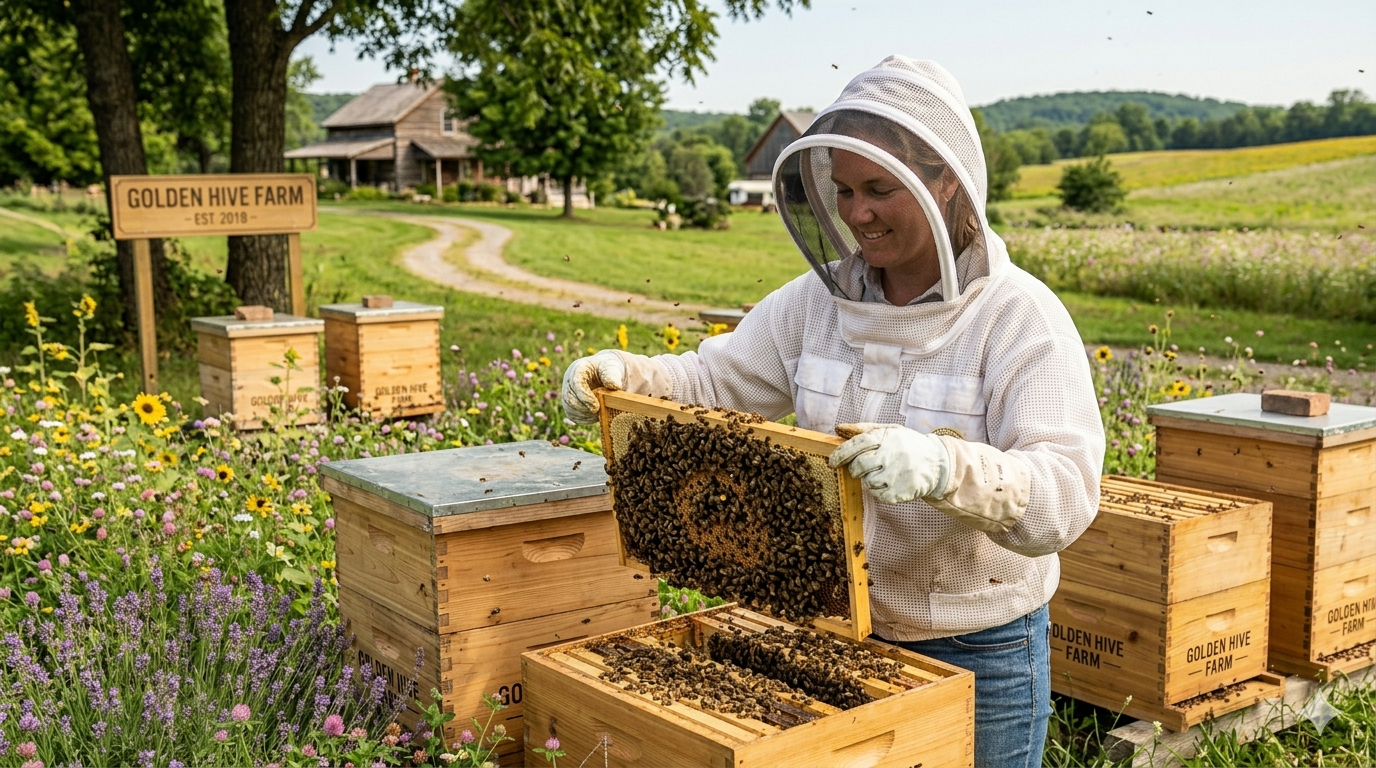
At Golden Hive Farm, we’re proud to offer certified, healthy Italian honey bees. Our bees are raised with care, our queens are naturally mated and prolific, and every package and nuc is inspected before it leaves our apiary. Whether you’re starting your first hive or expanding an existing apiary, we’re here to help you succeed.
Frequently Asked Questions
Are Italian honey bees aggressive?
No. Italian honey bees are renowned for their calm and gentle temperament. They are less defensive than German bees and less prone to disease. While they will defend their hive when necessary, they are not aggressive by nature.
Do Italian honey bees sting?
All honey bees sting, but Italian bees are less likely to do so compared to more defensive races. Their docile nature makes stings less frequent, and they’re generally forgiving of beekeeper mistakes.
Are Italian honey bees good for beginners?
Absolutely. Italian honey bees are the ideal beginner bee. Their gentle temperament, strong honey production, and forgiving nature make them perfect for new beekeepers.
How long do Italian honey bees live?
Worker bees live about 4-6 weeks during the active season and several months during winter. Queens can live 2-5 years, though most beekeepers replace them every 1-2 years to maintain optimal productivity.
Can Italian honey bees survive cold winters?
Italian bees can survive cold winters, but they require more management than cold-hardy races like Carniolans or Russians. They need adequate honey stores, proper insulation, and protection from moisture.
Are Italian honey bees resistant to varroa mites?
No. Italian honey bees are susceptible to varroa mites. However, with proper integrated pest management, Italian hives can be maintained healthy and productive.
Your Complete Italian Honey Bee Buyer’s Guide & Scientific Profile
What is the Italian honey bee scientific name?
The scientific designation is Apis mellifera ligustica. This distinguishes them from other subspecies like the Carniolan (Apis mellifera carnica) or the Russian honey bee. Knowing this name matters because pure ligustica genetics guarantee the gentle, productive traits beekeepers have relied on since 1859.
Are Italian honey bees aggressive, and do they sting?
This is the #1 fear for beginners. Let me be crystal clear: Italian honey bees are notably non-aggressive. While all bees sting defensively to protect their brood, Italians are exceptionally gentle. They are far less likely to sting than German Black bees or Africanized hybrids. In my decade of handling them, I’ve found that a light puff of smoke keeps them perfectly calm during inspections. Their defensive threshold is high, making them the safest choice for suburban backyards and beginner apiaries.
How long do Italian honey bees live?
This depends on the season. During the active summer months, a worker Italian bee lives roughly 4 to 6 weeks—literally working herself to death foraging nectar and pollen. However, the winter generation (those born in late autumn) live significantly longer, surviving 4 to 6 months to keep the queen warm through the cold months. The queen herself can live 2 to 5 years, though we recommend replacing her every 1 to 2 years to ensure maximum pheromone production and brood viability.
Buying Italian Bees: Packages, Nucs, and Mated Queens
:
-
Italian Package Bees (3 lbs): If you are looking for italian bee packages, this is the most common starter. A 3-pound package contains roughly 10,000 workers and a caged, mated queen. They establish quickly.
-
Italian Nucs (Nucleus Hives): Searching for “italian honey bee nucs for sale” is the best investment for a beginner. A nuc gives you 4 to 5 frames of established brood, drawn comb, and a laying queen. The colony is already a functioning family, giving you a massive head-start on the nectar flow.
-
Mated Italian Queens: For existing hives requeening, look for “mated italian queen bees for sale”. Ensure they are open-mated (naturally bred) rather than instrumentally inseminated, as they produce hardier workers.
⚠️ Why Buy Certified from Golden Hive Farm?
When you purchase from a certified apiary like https://goldenhivefarm.com/, you aren’t just buying bugs—you are buying genetic resistance and local acclimatization. Our Italians are bred to withstand your specific climate, reducing the winter losses that plague cheap, imported stock. We guarantee our queens are actively laying and our packages are disease-free, ensuring your apiary starts on the right foot.
🔥
-
Q: What is a 3-banded golden Italian honey bee?
A: This refers to the distinct yellow/amber stripes on the bee’s abdomen. A 3-banded Italian has three distinct yellow bands, while the “golden” variety is prized for its extreme lightness and beautiful, bright cappings on honey frames. -
Q: What does “Italian honey bee coin” refer to?
A: This usually refers to commemorative coins featuring the Italian honey bee, often struck by European mints to honor agriculture and biodiversity, rather than a specific beekeeping term. -
Q: Do Carniolan vs Italian honey bees look different?
A: Yes. Italians are lighter, ranging from leather to lemon-yellow. Carniolans are generally darker, grayish-brown, and appear more slender, though they are equally gentle. -
Q: What is the difference between Russian and Italian honey bees for overwintering?
A: Russians overwinter exceptionally well with small clusters and shut down brood rearing when pollen is scarce. Italians maintain a larger brood nest through winter, meaning they require significantly more stored honey (approx. 60-80 lbs) to survive compared to Russians. -
Q: How do you say “honey bee” in Italian?
*A: The translation is “Ape” (pronounced ah-peh) for a single bee, or “Api” for multiple bees. The Italian bee itself is known locally as Ape italiana or Ape ligustica.
Conclusion: Why Italian Bees Belong in Your Apiary
After years of working with various bee stocks, I keep coming back to Italian honey bees. There’s a reason they’re the most popular race in North America—they simply work.
Their gentle temperament makes beekeeping enjoyable rather than stressful. Their prolific brood rearing and strong foraging translate into abundant honey harvests. Their beautiful golden color and white cappings make your honey products visually appealing. And despite their weaknesses—robbing behavior, winter food consumption, varroa susceptibility—these are manageable challenges, not deal-breakers.
The Italian honey bee has proven itself adaptable to most climates, from subtropical to cool temperate. It has been the backbone of American beekeeping since 1859, and it continues to be the stock of choice for professionals and hobbyists alike.
If you’re considering starting your beekeeping journey or expanding your apiary, I can’t recommend Italian bees highly enough. They’re forgiving of beginner mistakes, productive for experienced beekeepers, and a genuine pleasure to work with.
Ready to start your Italian bee journey?
At Golden Hive Farm, we offer certified, healthy Italian package bees, nucs, and mated queens. Every bee is raised with care, and every queen is naturally mated and prolific. We stand behind our stock because we believe in the Italian honey bee—and we want you to experience the joy of working with these remarkable insects.
Visit us at https://goldenhivefarm.com/ to place your order or learn more. We’re here to help you succeed.
Further Reading
Newsletter Updates
Enter your email address below and subscribe to our newsletter