Buckfast Queen Bees for Sale: The Gentle, High-Yield Choice for Healthier Hives
Mated & laying queens | Live arrival guaranteed | Exceptional mite resistance
If you’re searching for Buckfast queen bees for sale, you’ve likely heard about the legendary work of Brother Adam and the “superbee” he created. The Buckfast bee is not just another commercial strain—it’s a carefully developed breed renowned worldwide for its gentle temperament, high honey production, and remarkable resilience against pests and diseases.
In this guide, we’ll explore why Buckfast queens have become a favorite among hobbyist and commercial beekeepers alike, what makes them different from other popular bee strains, and where to buy Buckfast queen bees online.
The History of the Buckfast Bee: Brother Adam’s Lifelong Quest
The Buckfast bee is a man-made breed—a cross of many subspecies and their strains—developed by Brother Adam (born Karl Kehrle in 1898 in Germany) , who was in charge of beekeeping from 1919 at Buckfast Abbey in Devon, England.
In 1916, the infamous Isle of Wight epidemic (later identified as a tracheal mite infestation) devastated the native British honey bee population, leaving only 16 surviving colonies at the abbey, all of which were either Ligurian (Italian) or Ligurian queens mated with the English black bee. Brother Adam began importing queens from Italy and France to rebuild the stock.
In 1919, a queen named B-1 was raised that “embodied all the desirable qualities of the Ligurian and former Native in an ideal combination”—and it is from this queen that all modern Buckfast bees can trace their ancestry. Over decades, Brother Adam continued his breeding program, traveling the world to incorporate genetic material from subspecies including the Italian, Cyprus, Greek, and Anatolian bees.
His cross-breeding work created what many apiarists regard as the healthiest and most prolific honey producer ever bred—so prized that in 1982, thieves stole two queens from the Buckfast Abbey apiaries.
Key Characteristics & Benefits of Buckfast Queen Bees
Buckfast queen bees are prized for a unique combination of traits that set them apart from other commercial stocks. Below is a breakdown of their most notable qualities.
1. 🍯 Exceptional Honey Production
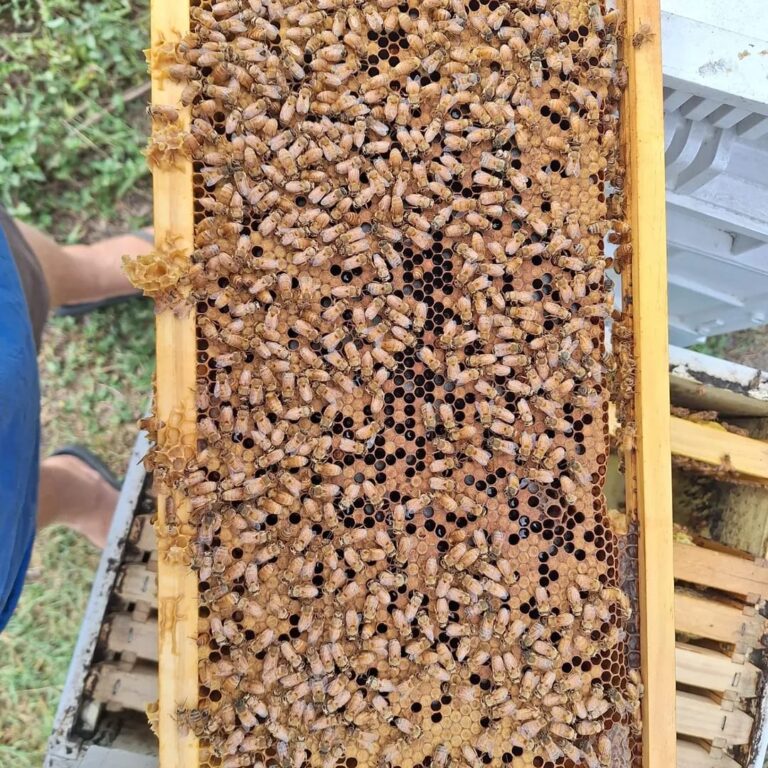
If your goal is maximum honey yield, Buckfast bees deliver. Their colonies build up quickly in early spring, forage efficiently—even in cooler or cloudy weather—and maintain strong honey flows throughout the season. The queen’s prolific laying pattern produces a robust workforce that translates directly into surplus honey.
2. 😌 Gentle, Docile Temperament
Buckfast bees are known for being calm and easy to handle, making them perfect for:
- New beekeepers learning hive management
- Urban or backyard beekeeping where neighbors are nearby
- Families, schools, and community apiaries
This gentleness is a hallmark of the breed and one of its most frequently cited advantages.
3. 🐜 Natural Mite Resistance
One of the standout features of Buckfast Queen Bees is their impressive disease and pest resistance. They have been selectively bred to withstand common brood diseases, tracheal mites, and demonstrate Varroa tolerance.
Scientific research supports this: British and Texas Buckfast honey bee stocks were found to have one-third to one-half the mean prevalence and abundance of tracheal mites as Canadian standard stock, indicating that Buckfast stocks are less susceptible to tracheal mites.
4. ❄️ Cold Hardy & Excellent Wintering Ability
Buckfast bees are renowned for their ability to thrive in harsh climates. They have adapted to survive long, cold winters—a trait carefully cultivated in Buckfast breeder queens. Their wintering ability makes them an excellent choice for beekeepers in northern regions or areas with unpredictable weather patterns.
5. 🚫 Low Swarming Tendency
Buckfast bees are less prone to swarming compared to other strains like Carniolans, simplifying hive management. This means less time spent chasing swarms and more time focusing on honey production and colony health.
6. 🏗️ Economical Winter Stores
Buckfast colonies form tight, efficient winter clusters, conserve resources with balanced brood rearing, and often emerge from winter with surplus honey stores. This frugal use of stores is a major advantage in regions with long, cold winters.
7. 🔧 Low Propensity to Rob
Buckfast bees have a low inclination to rob, a behavior that can devastate weaker neighboring hives. This trait contributes to a more harmonious and manageable apiary environment.
Buckfast vs. Carniolan vs. Italian vs. Russian: Comparison Table
| Feature | Buckfast Queen | Carniolan Queen | Italian Queen | Russian Queen |
|---|---|---|---|---|
| Temperament | Very gentle | Very gentle | Gentle | Moderate |
| Spring Buildup | Rapid | Explosive | Good | Slow to moderate |
| Honey Production | Very high | High | High | Moderate |
| Overwintering Ability | Excellent | Very good | Poor to good | Very good |
| Swarming Tendency | Low | High | Low | Moderate to high |
| Varroa Resistance | Moderate (tolerance) | Low | Low | High |
| Tracheal Mite Resistance | High | Low | Low | High |
| Robing Tendency | Low | Very low | Moderate | Low |
| Propolis | Low | Low | Low | Low |
| Best For | Northern climates, urban apiaries | Northern climates, early flows | Warm climates, beginners | Varroa management |
Sources: NC State Extension and Backyard Beekeeping.
Important Considerations: The “Second Generation” Issue
The single biggest con to Buckfast bees is that if you allow them to naturally requeen, the second generation (F2) is likely to become aggressive. This is not a defect—it is the result of open mating with local drones of unknown genetics. To maintain the desirable traits of pure Buckfast genetics, beekeepers must continue to purchase Buckfast queens rather than relying on natural requeening.
As Meyer Bees notes: “Without consistent pure Buckfast queens, later generations (F2, F3) can become defensive or aggressive”.
Where to Buy Buckfast Queen Bees for Sale
When purchasing Buckfast queen bees online, look for suppliers that offer:
- Mated, laying queens — already producing eggs
- Queen cage with candy plug and attendants — for safe introduction
- Live arrival guarantee — critical for shipping live insects
- Optional marking and/or clipping — for easy identification
Recommended Suppliers (USA)
| Supplier | Product | Price | Key Notes |
|---|---|---|---|
| Meyer Bees | Buckfast Queen Bee | $40.00 | Mated & marked; 3-hole cage with candy and attendants; shipping begins early June |
| Mann Lake | Buckfast Queen Bees | Varies | Tracheal mite resistance, Varroa tolerance; breeder queens with exceptional brood patterns |
| Lappe’s Bee Supply | Buckfast Hybrid Live Queen | $44.95 | Free UPS Next Day Shipping on 3+ queens; young, naturally mated queens |
| Hansen Honey Farm | Buckfast Queen Bee (Pre-Order) | $42.00 | Sourced from Northern California; cold, wet winter adapted; low swarm tendency |
🔗 : Meyer Bees – Buckfast Queen Bee
🔗 Lappe’s Bee Supply – Buckfast Hybrid Queen Bee
🔗 Hansen Honey Farm – Buckfast Queen Bee (Pre-Order)
🔗 : Backyard Beekeeping – 5 Honey Bees to Consider
How to Introduce a Buckfast Queen Bee to an Existing Hive
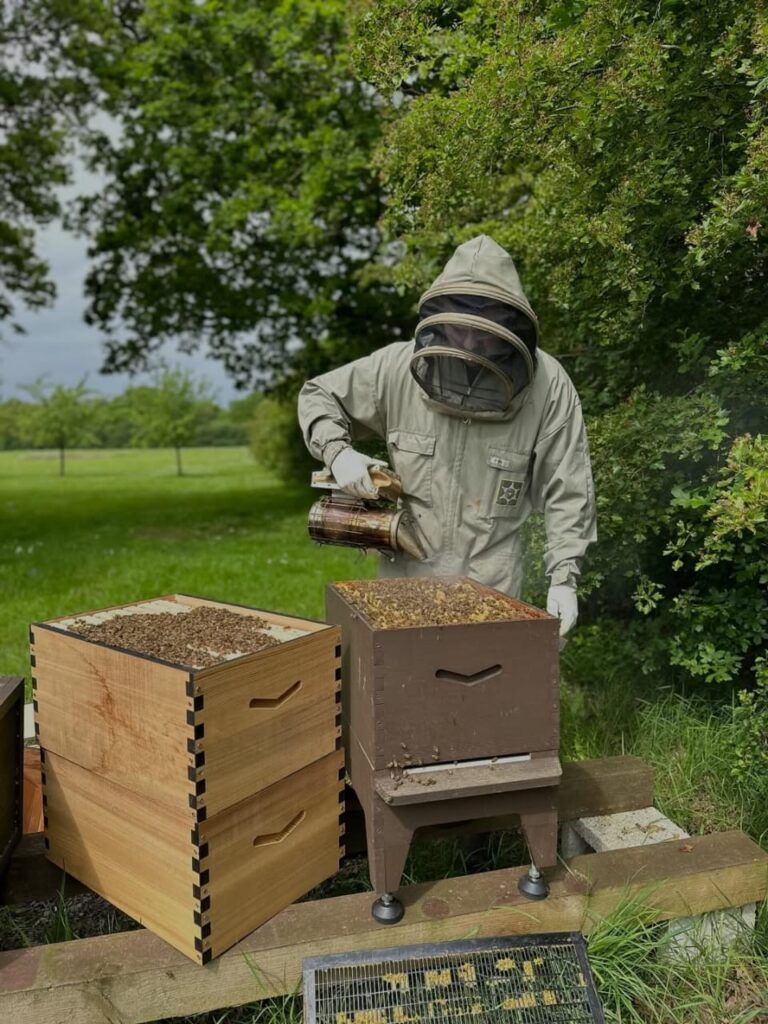
Introducing a new queen requires patience and proper technique. Follow these steps for >95% acceptance:
- Make your hive queenless 24–48 hours before introduction by finding and removing the old queen.
- Place the queen cage between two frames containing brood. The center of the brood nest helps pheromones work in the queen’s favor.
- Ensure the candy plug is accessible. Leave the plug intact—the queen will be released gradually as the bees eat through the sugar. Removing the plug prematurely risks rejection.
- Allow 3–5 days for acceptance. During this time, worker bees will become accustomed to her pheromones.
- Check after 5 days. If the queen is free and eggs are present, introduction was successful. If not, open the candy end and let her walk out manually.
🔗 Mann Lake – Queen Bee Introduction FAQ (see FAQ section)
Frequently Asked Questions About Buckfast Queen Bees
Q: Are Buckfast queen bees suitable for beginner beekeepers?
A: Yes, absolutely. Their gentle temperament, robust health, and high honey production make them an excellent choice for beginners. They are also ideal for urban beekeeping where low aggression is a priority.
Q: How soon will I see results after introducing a Buckfast queen?
A: You may see initial changes in 1–2 weeks as the queen begins to lay and influence worker bee behavior. However, it takes a full brood cycle (approximately 21 days) to see the queen’s full effects on honey production, disease resistance, and colony growth.
Q: Do Buckfast bees require special management?
A: While they are relatively low-maintenance due to their disease resistance and cold tolerance, general good beekeeping practices remain essential. This includes regular hive inspections, monitoring for pests, and providing proper food and water sources.
Q: Can I let my Buckfast hive requeen naturally?
A: You can, but be aware that open mating with local drones will produce a second generation that is likely to be more aggressive. Most Buckfast keepers continue to purchase pure Buckfast queens to maintain desirable traits.
Q: What is the difference between Buckfast and VSH (Varroa Sensitive Hygiene) stocks?
A: Buckfast bees exhibit mite tolerance rather than the specific hygienic behavior of VSH stocks. They maintain lower mite loads through grooming and other behaviors, but they are not as specialized as VSH-bred lines. However, some breeders are now incorporating VSH traits into their Buckfast breeding programs.
Newsletter Updates
Enter your email address below and subscribe to our newsletter